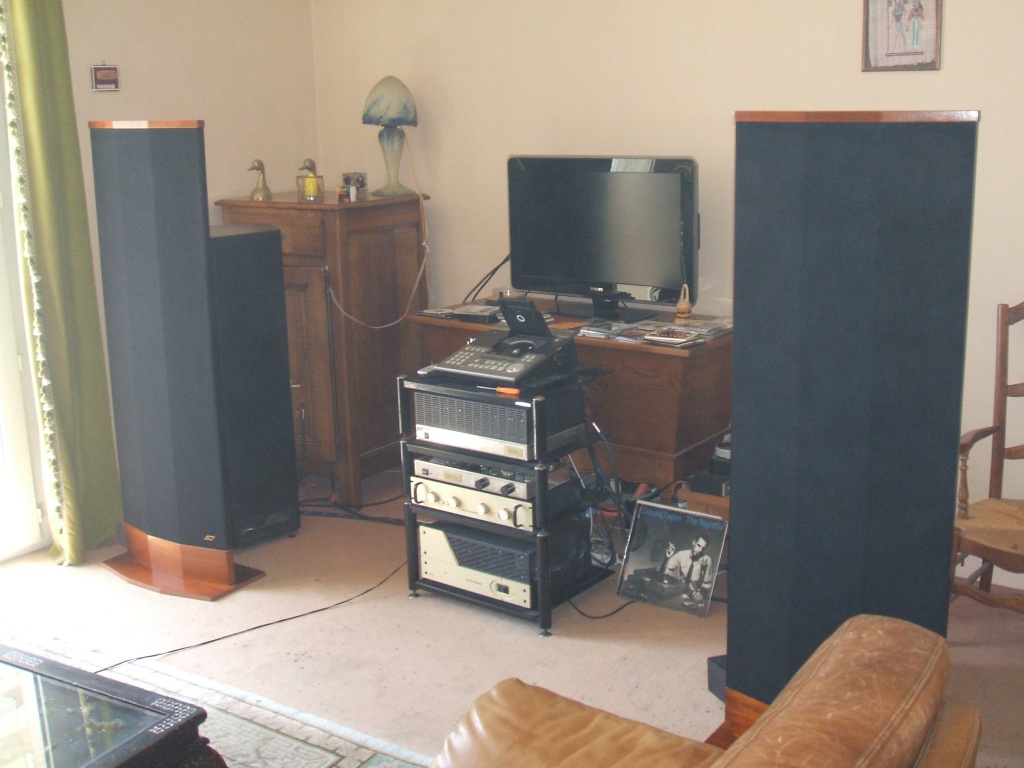
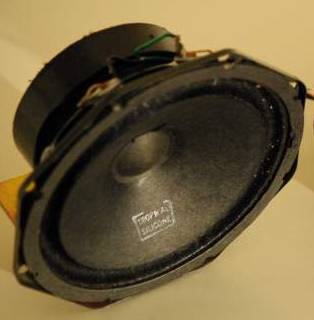
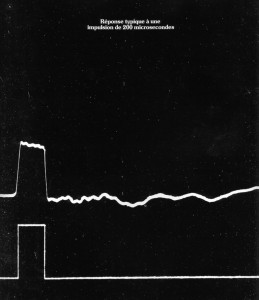
 AW Audio electrodynamic panels EA12 chez Raymond Lerat I have been communicating with Raymond for quite some time as he is the lucky owner of a pair of EA12 from my friend and fellow speaker designer Alain Wacquet. Raymond has also been helpful in providing information for my article on Confluence. He has just posted a comprehensive review of these fabulous speakers on the forum Audio Vintage and has kindly given permission to rewrite and translate his prose in English here. For those of you who read French and want to read the original post, here is the link: http://www.audiovintage.fr/leforum/viewtopic.php?f=20&t=56039 My notes are in italics in the text below EA12 presentation by Raymond Lerat - The English version Raymond Lerat had the pleasure to meet with Alain Wacquet in Nancy chez Audio Video Son in the mid 80s. He found him affable and full of humour with a smile on his face, and passionate about music with a penchant for jazz, and a composer himself, up to this day where he indulges in more esoteric compositions with prepared instruments and noises. He was born near Lille in the Northern part of France, close to the Belgium border. (This is where I met Alain...) Raymond first interest in presenting these panels to the Forum was to gauge the level of knowledge, interest and exposure that the members of the forum might have with this confidential range of vintage speakers from the early 80s. Raymond notes that all people he knows who have been exposed to AW speakers were all enthusiastic about them, specially when reproducing jazz ensembles and small classical formations where they excel. Their main characteristic been described as "energetic", with a real sense of "beeing in the room" and with perfect imaging and spatialisation. All reports written over the 10 years of research by Raymond have all returned an "enthusiastic" response. The way Raymond describes his first encounter with AW Audio fells short of a "love at first sight" declaration, but like often, the object of ditto love seems unreachable financially and is left confined to the realm of dreaming...until such a time where it suddenly becomes accessible. Raymond goes on to describing various experiences with other panels, like Magnepan, Stax, Audiostatic and Quad, products which were not lacking in anything, but which would actually add undesirable things, in his opinion. With Magnepan for instance at the time, the image of a piano might have been stretched to 15m or so, within an orchestra which would feel like 20m wide, so the proportions of the sonic image was distorted. Inadequate dynamic range, lack of the bottom octaves, short circuit between front and back fields made it near impossible to position the panels for the best results in a given space. Lansing Trimline, DCM Time Frame, Carver in the US, Phonophone, Triangle in France have tried to use electrodynamic drivers to design such a type of speaker with various degrees of acoustic success, but no commercial one. Alain Wacquet managed to stay in business for over 10 years, while producing a "haute couture" type of product, made by hand, with love and exceptional craftsmanship, hence expensive. The objectives and typical qualities of an electrodynamic panel are a credible horizontal and vertical image, with a cylindrical polar response, providing a stable, accurate and homogenous response and image. The impulse response - slew rate - will have to be exceptional, vastly superior to any other system, with a very good reproduction of timbres, the hallmarks of an acoustic doublet system. The use of a linear array of mostly identical small full range drivers will provide such result if they are correctly implemented. If not, the result will be like a "sonic porridge" as Raymond nicely puts it. NOTE: I have found this measurement from a LEEDH Perspective designed by Gilles Millot, using the same driver as a midrange. This shows the exceptional impulse response of the main driver used by AW Audio, a WFR12 from Audax. It is to be noted that 6 12cm drivers have an equivalent surface to a 300m woofer with half the mass...But the resonant frequency would be about double, hence why the lower octave can't be reproduced at the same level as a 300m woofer which fs would be around 30Hz.
Obviously, it will be expected that the lower octaves of the audio spectrum will be somehow reduced in level, but still extremely clean because of the speed provided by the light membranes of the drivers, but also by the acoustical short circuit between the front and rear waves. Trying to add a subwoofer often results in a bad marriage, which Raymond describes as trying to mate a carp and a rabbit! Raymond has experimented with electrostatic and isodynamic panels over time but found them lacking inefficiency, and dynamic range, qualities required to give life and freedom to the music, a treat that a boxed system cannot achieve. For these reasons Raymond had abandoned his quest, even though he owned a pair of QUAD ESL 63 in the 80s.
The various advantages of a panel speaker compared to a box speaker A bit of history - You might want to read my own articles on the timeline of AW Audio The AW Audio adventure started in 1985 after two years of research prior, resulting in the introduction of the EA12 first panel, then the less expensive EA11 and finally the outstanding EA16 which only 10 pairs have been sold. Later the EA12 would be replaced by the PA12 and there are a few units of the ultimate Transparence (in Alain's basement...) all this over a 10 year period and through a handful of dealers around the country. Raymond didn't get a chance to listen to this second generation of panels, which seem to carry the same drivers, although they are no longer locked behind the fabric. (neither did I...) Obviously, the difficutiles of marketing and selling such a boutique range of products of such high quality, superb finish, designed by a passionate and uncompromising man such as Alain was not a piece of cake, having to abide by the rules of greedy esoteric and high end dealers, (being used to extravagant margins to push such a product and others..) Raymond goes onto explaining some of the reasons behind Alain's decision to abandon the project although all public demos were all spectacular and well received in comparison with similarly priced products at the time. Essentially, it was extremely difficult to transform all these marketing efforts into sales. (I have witnessed a number of these demos and they are amongst the best I have ever heard at any price... It took me decades to find something better, and you probably know that I am referring to my friends at Kyron Audio here!) Raymond goes on to compare the experience of listening to an AW Audio panel to the degustation of a Grand Cru wine, as it stays with you for the rest of your life either on the palate or in your ears. (Obviously, you can rejoice time and time again to the pleasure of listening to a pair of good speakers, difficult and somehow far more expensive to keep drinking bottles of Ducru-Beaucaillou 1982, my all time favourite wine, if you can find some, that is...). The relation between cost of manufacturing and sale price is quite similar in both cases... To calibrate the topic, a pair of EA11 cost 15500 francs, EA12 25000 Francs. EA16 50000 francs. (The dealer was probably buying them for less than half that price, and a pair of EA12 was equivalent to my generous monthly salary at Hewlett-Packard..., so Alain would have to sell at least two pairs a month to barely survive!). A pair of EA12 was sold at the same price as a pair of Confluence "Pastorale" designed by another atypical engineer, musician, music lover and passionate.
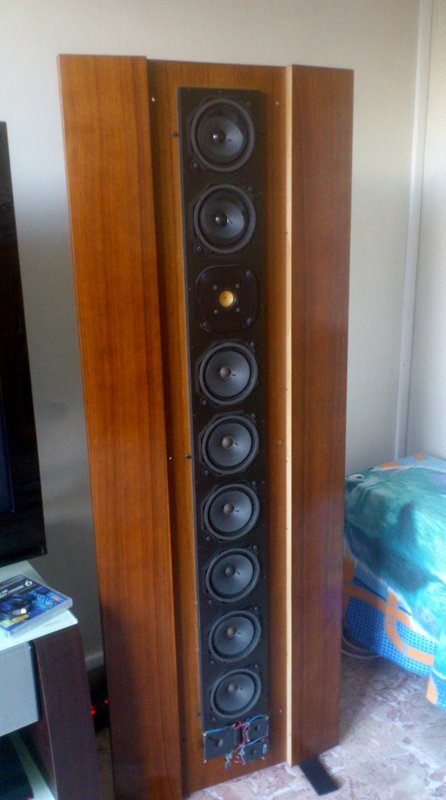
Alain Wacquet had some serious criteria and objectives to design his panels: linear phase, homogeneous polar response, slew rate and extended dynamic range, timbres accuracy and enough bass in such a dipole setup, maybe not as deep as a traditional box speaker, but certainly cleaner in many aspects. The AW Audio panels had very few rivals at the time with these parameters in mind. Alain has never unveiled anything much about the crossover schematic, nor the treatment of the midrange drivers, but one can see that 8 drivers (WFR12 from Audax) were used in line, the two top ones have some treatment applied and are dedicated to the midrange, the six at the bottom are the bass drivers. A Focal tweeter takes care of the higher frequencies. It is a 2-way electrically but three way acoustically. The coherence and balance of the system are outstanding (The quality of the voices, male or female and accuracy of the timbres particularly on percussions were astonishing and Alain was a perfectionist when it came to choose the music that would put the best out of his speakers... At some hifi shows where we were both exhibiting, I would sometime abandon my own stand to delight myself in Alain's demos...). The AW Audio panels are quite easy to set up, specially compared to other types of panels, when it comes to spread and tilt as well as distance from the walls. A reasonable power amplifier is enough as the efficiency of these speakers is around 91db/1w/1m. Even a valve amplifier will be a good match, bringing out all the qualities of the panels on vocals and small musical ensembles. Listening test In a few words, the general impression left by listening to the EA12 is one of balance, with an image as wide as it is high and deep with a great sense of precision, without halo around the instruments, with no listening fatigue. The differences between live or studio recordings are well articulated as there is no fuzzyness attached, giving the impression of space between the various instruments, what can be expected of a panel speaker versus a traditional cabinet of the same quality. Percussions are very realistic, the brass are physical, and the strings are very quick, all timbres rendered with accuracy, speed and finesse, the vocals are superb, palpable... The bass is as speedy as the upper spectrum, there, with a sense of freedom, it breezes... All listeners agree that, even though the very bottom part of the spectrum is not present, the quality of the bass is second to none, not withstanding much larger box speakers. Having bought the Confluence "Pastorale" two weeks after getting the EA12, Raymond had extensive comparative listening sessions over the last two years. The EA12 excel at jazz and classical small ensembles with their imaging, finesse and precision, still providing a big sound even at low volume On the other hand, the Pastorales are more polyvalent, specially if one listens to pop, rock or soul music.. (I am tempted to disagree with Raymond on this, being a great lover of small speakers, where imaging, precision and finesse are more important than a lot of bass. In many ways, AW Audio and Microphase were very similar in their objectives and were both very accurate and quick, with a great imaging, hence why we became friends quite naturally). Each speaker brings its own character to the party and that is why so many people design speakers as it is still the realm of some "black magic", definitely an art form. Raymond goes onto stating that his "graal" for listening at home still favours high efficiency and dynamic range over other criteria, implicitly giving the preference to AW Audio. It is worth noting that the EA12 and the Pastorales are in the same price range, hence there is a valid point in comparing the two systems. Raymond concludes by saying he was very lucky to find a pair of EA12 to buy, almost 30 years after having first seduced by Alain's demos and contraptions, as most owners of AW Audio panels tend to keep them for themselves. And I would agree with that statement 100%! 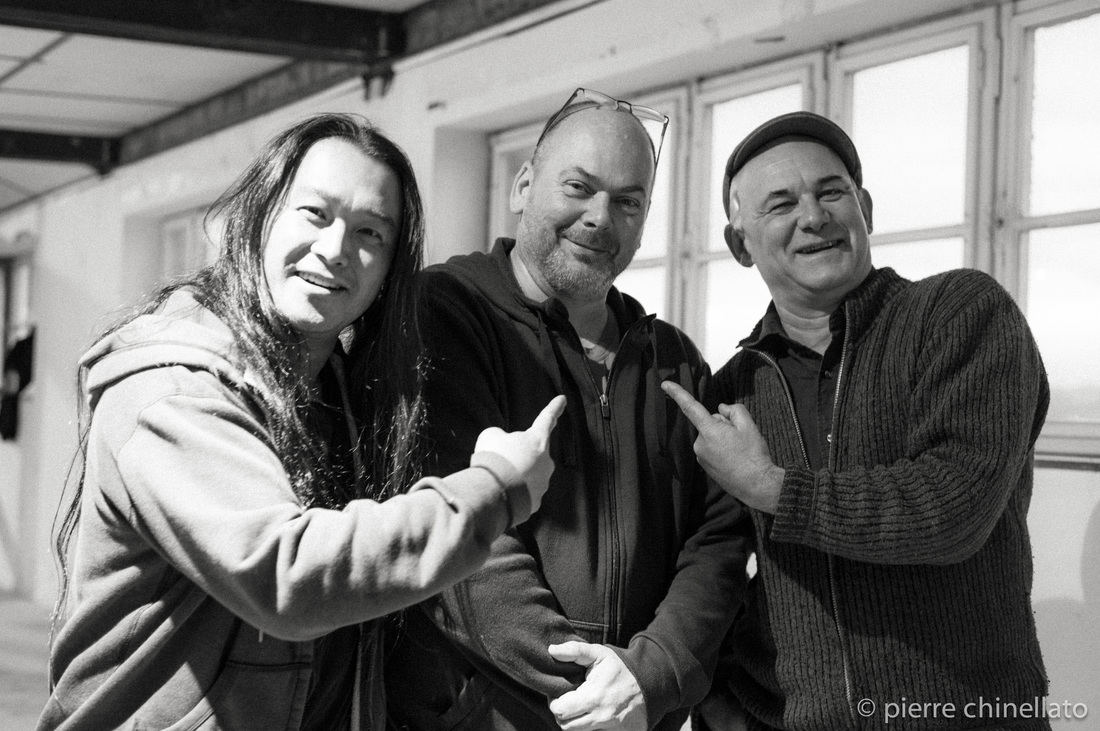 A relatively recent photo of Alain Wacquet with two of his musician friends 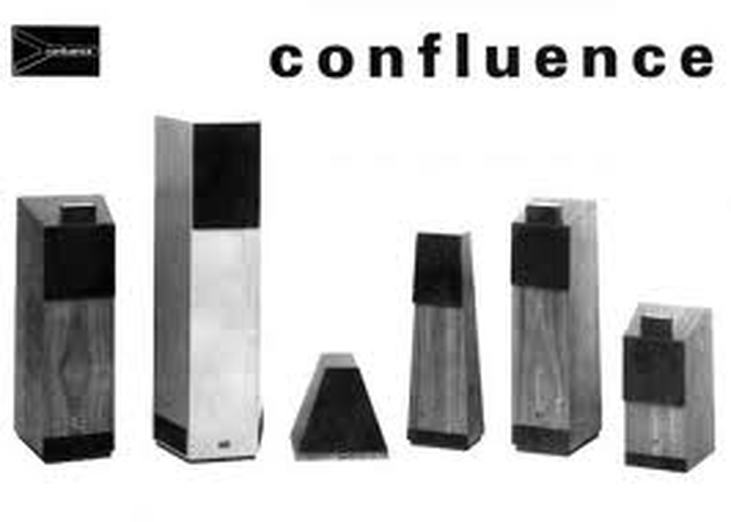 Confluence Speaker Range - 1983 to 2001 Confluence was started in 1983 by Christian Gerhards, an ex-teacher whose passion for music got him into speaker design. The company survived until 2001 when it became Soneco. All the models share the same design principles of cabinets with non parallel faces and rectangular port(s) at the bottom. They mostl use double coil Focal drivers and a rare Audax tweeter, derived from the famous TW51 with a small rectangular horn in front. GUY HF manufactured the cabinets for these speakers from 1991 to 2001 and then Ets Berthommé in Availle (Limousin) took over. The Cantilene has been the most successful model commercially. 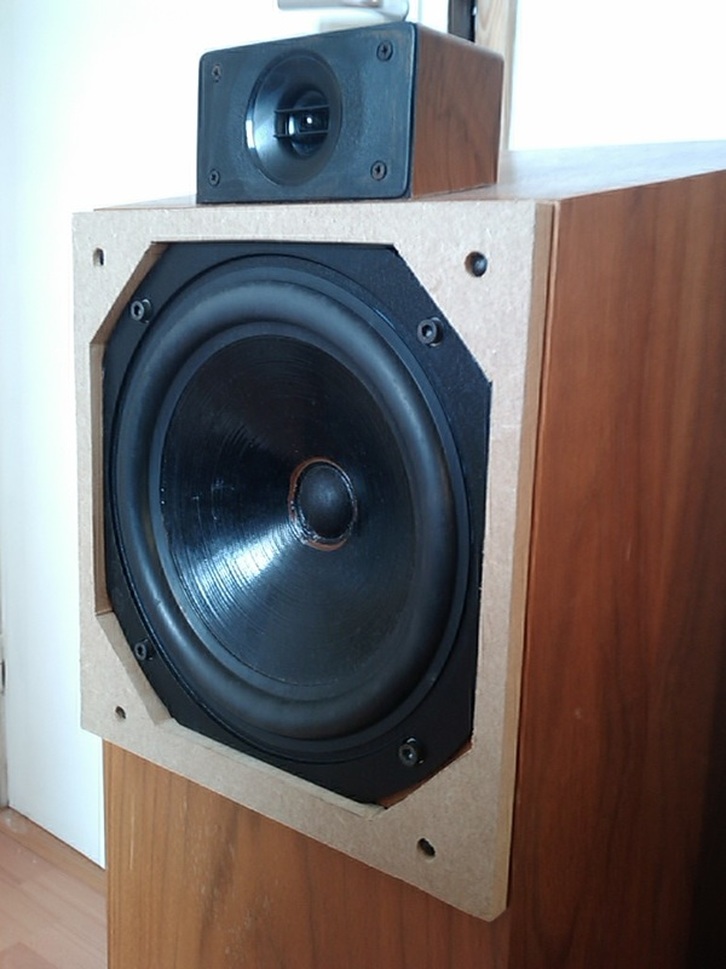 Close-up view of a Cantilène showing the drivers I will make a particular mention of a model that was not a success, more an experiment. I am talking about the Chimère, a 125kg monster with no money spared and amazing design principles. First is the use of a Phy-HP full range driver with an open back, second a piezo tweeter from Audax all in separate cabinets, the midrange one being supported via its own invisible metal stand and supporting cones, going through, but decoupled from the subwoofer cabinet. and finally cut-off frequencies of the crossover at 150 Hz towards the 34cm Focal bass driver and 6Khz to the piezo tweeter. See photos and diagram below. The crossover is in a separate and external box. Apparently, only three pairs were ever manufactured... 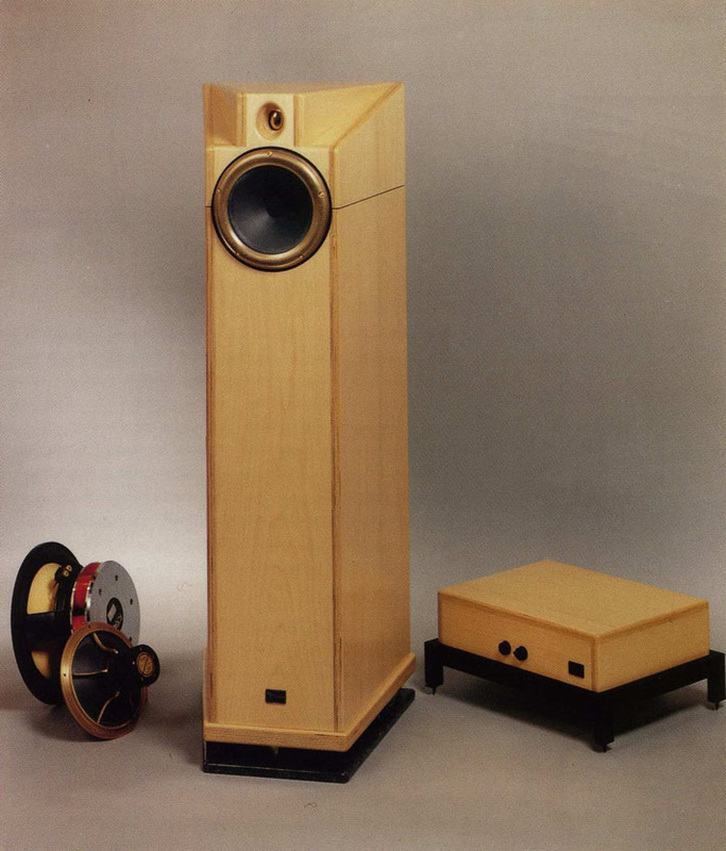 Confluence Chimère and its special drivers and external crossover 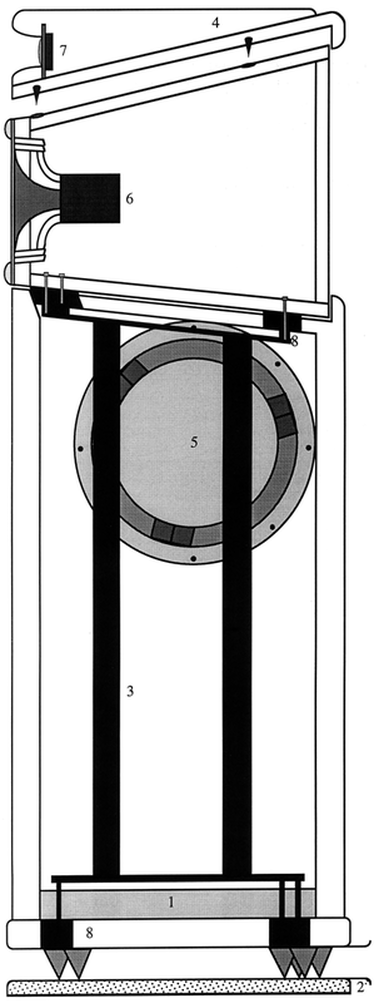 Confluence Chimère complex cabinets and internal structure Interestingly enough, Jean-Paul Guy had designed an adjustable panel to form a variable tuned port on a previous model, and this was used on the subwoofer here as well. But the most amazing part of the story is that some years later, this idea was used again with some of the same drivers by no other than Ocellia! Phy-HP full range, piezo tweeter AND adjustable port... 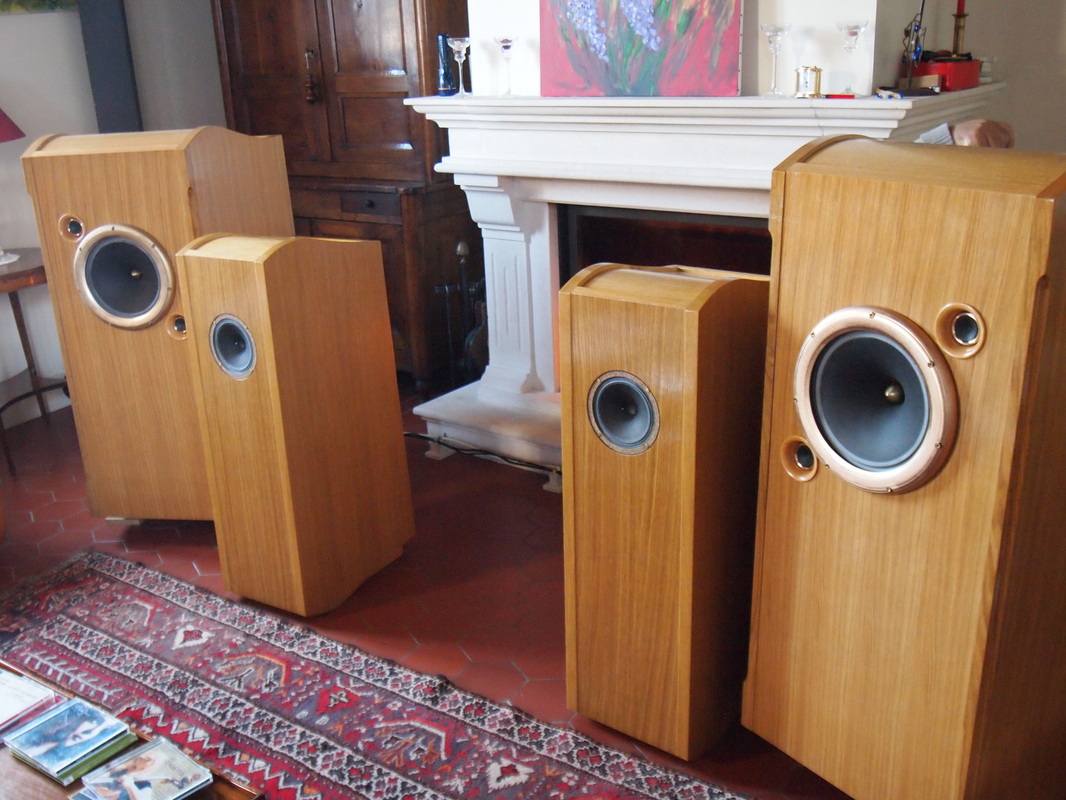 Ocellia speakers chez Point-Musique. Click the photo to read interview and review And BTW, these were some of the most amazing speakers I had a chance to listen to in my long hifi life, so I can only imagine how good the Chimère might have been! This "money is no object" design was turned into a more commercially minded product, the Cantilène III, using all Audax drivers, 2x17cm AM170G8 and one textile dome tweeter the famous TM 025 C1. 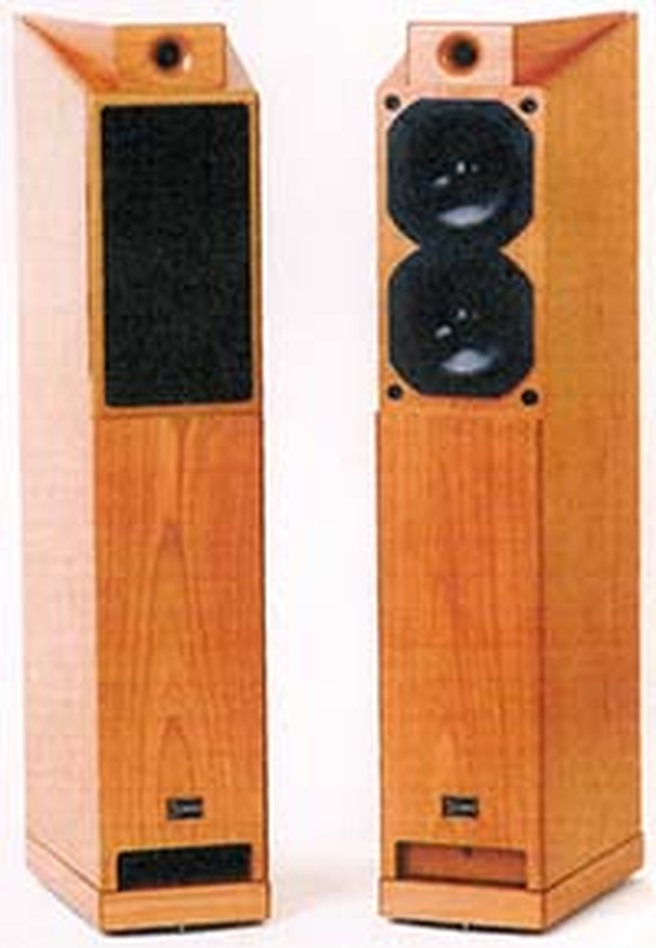 Confluence Cantilène III - last known product This is probably the last known design by Confluence in 2001. I should now pay tribute to Raymont Lerat and Christian Quest for their excellent "virtual museum" on all things Confluence. Even if you don't read French, most of technical details will be obvious to the keen hifi nerds that you are and I will thank them for all the photos in this article. Here is the link: 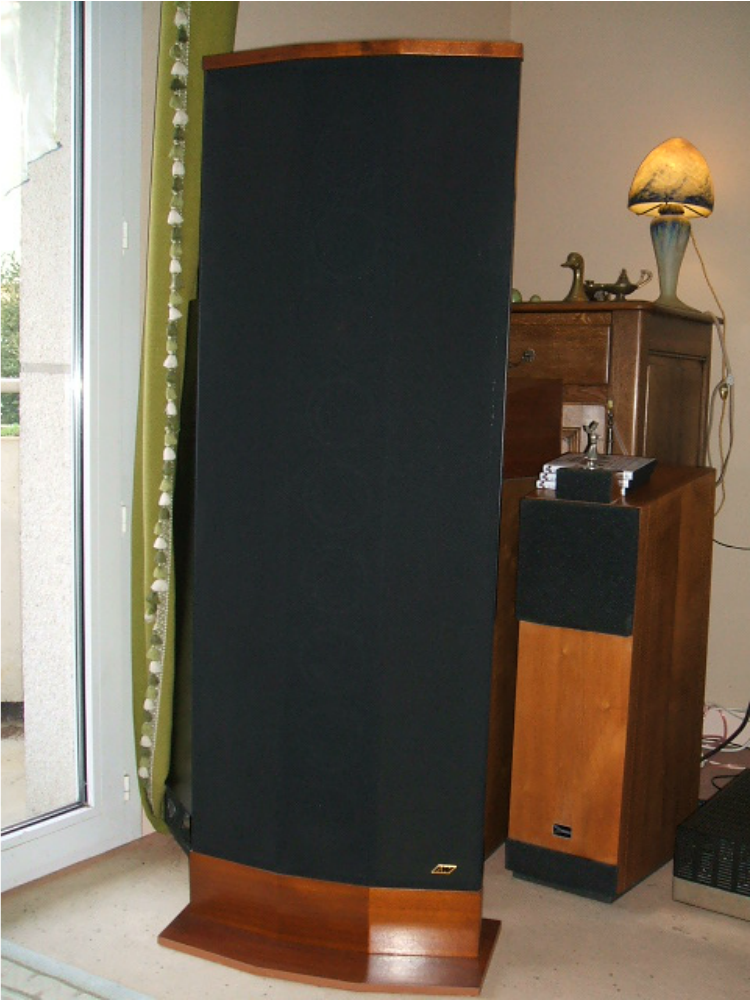 Incidentally, but not surprinsigly, Raymond is also a fan of AW Audio, An EA-12 panel next to a Confluence  Behind this simple logo hides more than 70 years of expertise in building modern furniture for famous designers of the time, some of the first TV cabinets and later on specialising in speaker cabinets for the most prestigious names of the French HiFi scene like Elipson, Jean-Marie Raynaud, 3A, A2T, Audax, AudioAnalyse, Audio Reference, Confluence, Elipson, France Acoustique, Mercuriale, Phonophone, Siare and for JM Lab/Focal, a collaboration over 30 years, Focal eventually buying the business in 2007. What an achievement for Emile, the father, and his son Jean-Paul Guy from the tiny city of Bourbon-Lancy, home to just over 5000 people but famous from Antiquity for its spa. GUY.HF is only one of two companies listed on Wikipedia in the town! Jean-Paul Guy who I have known since 1983 has benefited from growing up in a rich cultural environment because of the trendy original clients of his Dad, like the famous interior designers Leleu Marcel Gascoin and Maxime Old. Jean-Paul is a serious melomane and a great collector of modern art with a collection of over 600 pieces which he occasionally lends to museums for specific exhibitions. An hedonist, he loves all the finer things in life... He is also a speaker designer in his own right and was developing some products very similar to my Microphase around the same time, hence probably why he accepted to build our products. As proof, you will find below some extracts of his catalogues, some products being sold under the GUY.HF brand and some more elaborate ones under the "Natural Sound" brand. 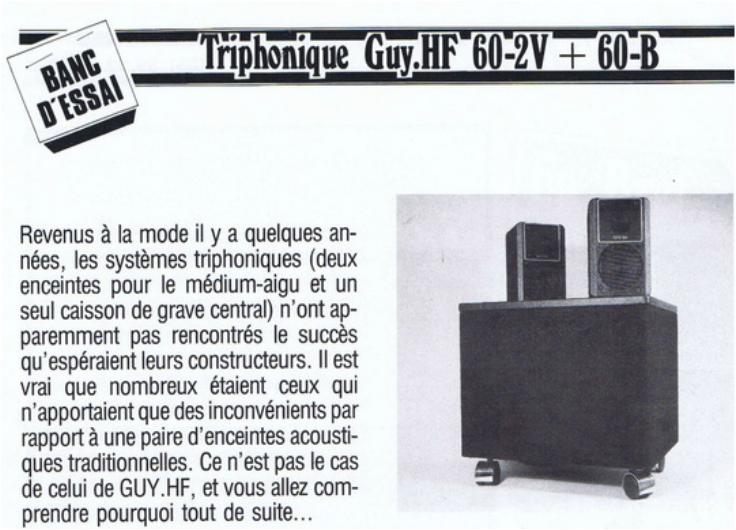 GUY.HF Triphonic System - 1982 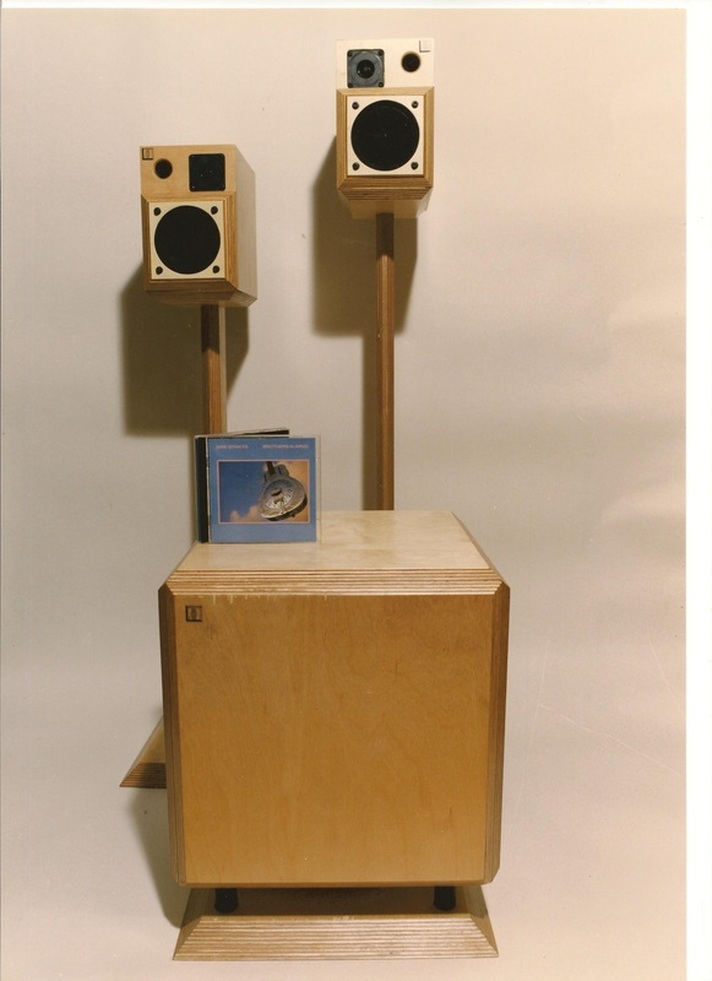 Microphase Triton System for comparison - 1984 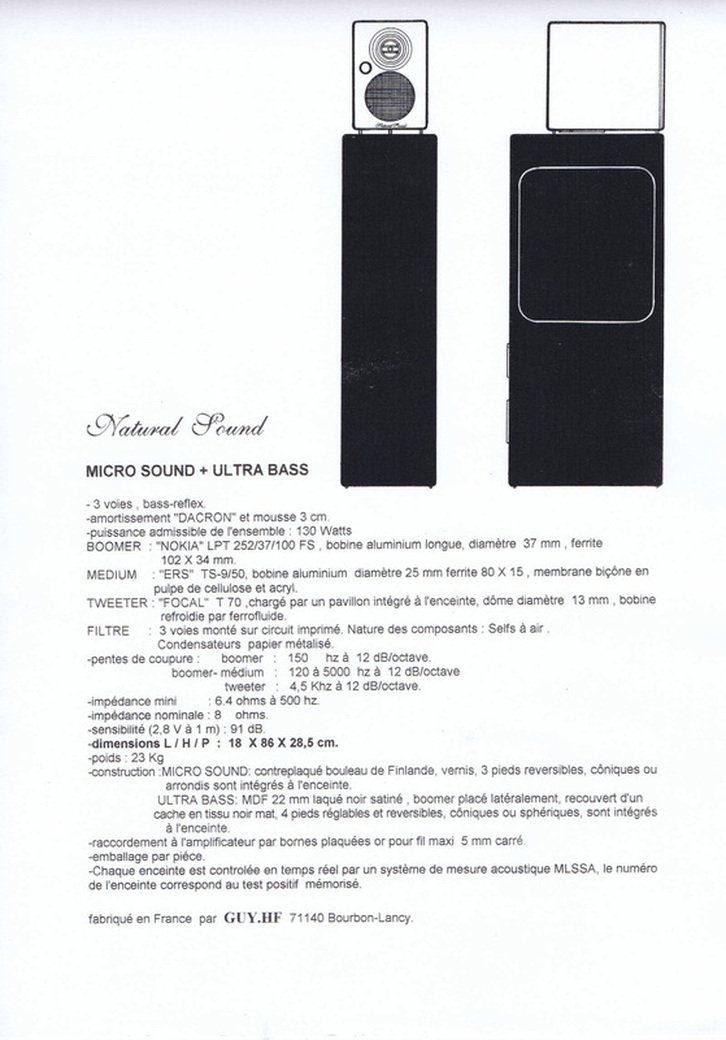 GUY.HF "Natural Sound" system - 1982 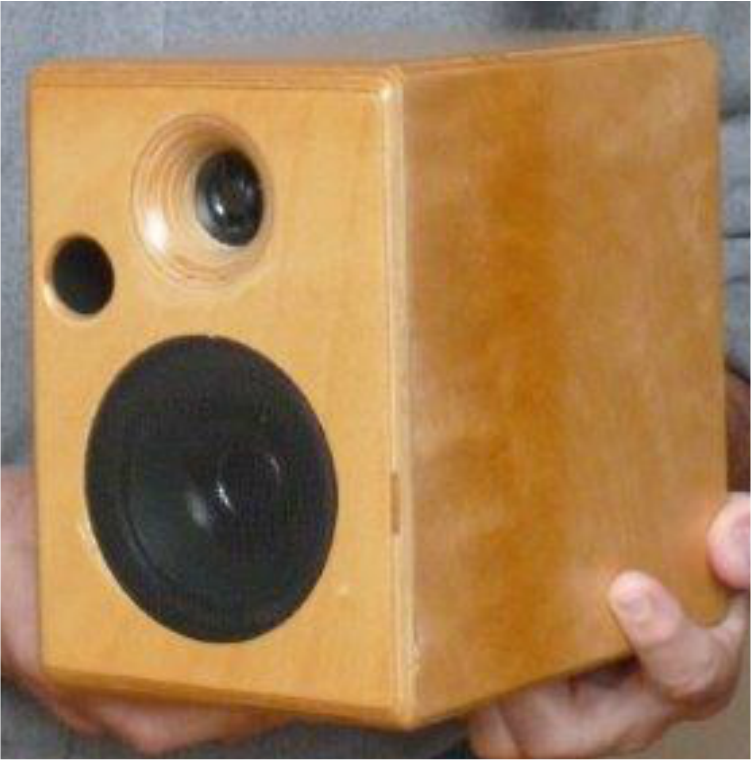 A revised version of the"Micro Sound" after the demise of Microphase 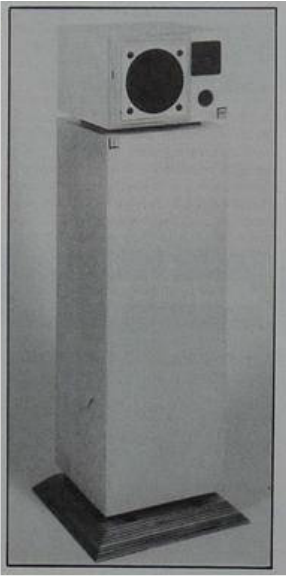 Microphase SAT+SWS system - 1984 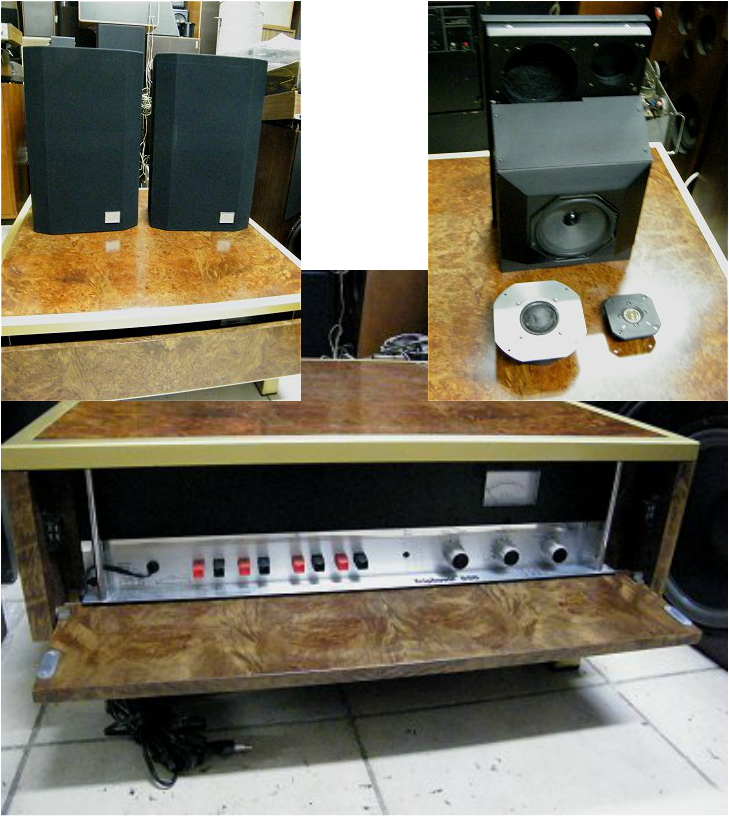 3A Triphonic System 800 + Atom satellites - Photos courtesy of Hifi Antique circa 1980 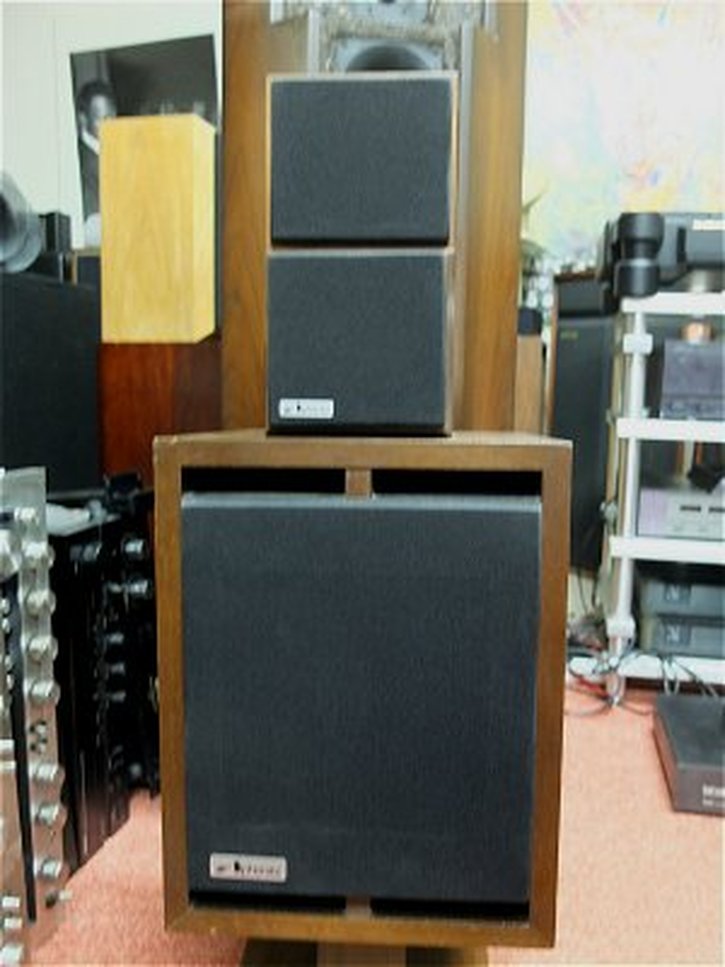 Another similar concept by Alpheratz - Photo courtesy of Hifi Antique - circa 1980 I find interesting in retrospect that we were all trying to replicate the 4240 from Elipson on a smaller scale and for less money. In many ways, most of these systems actually achieved this objective with very limited means sometimes and as a result, these companies didn't stand the test of time. But most importantly, GUY.HF and Jean-Paul were instrumental in helping these small outfits getting manufactured properly at a price which leaved them with enough margins as well as staying competitive in the retail market. Jean-Paul was also very helpful in streamlining the manufacturing process by advising us on ways to save money without too much compromise on the final auditive and visual results.Un grand merci! 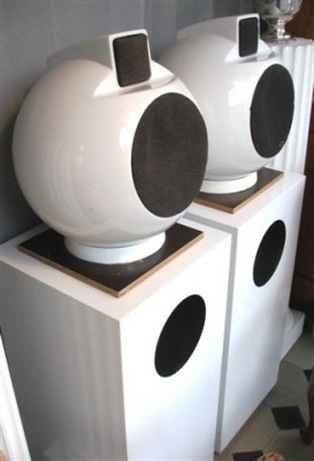 the famous Elipson 4240 - 1970s - my first love! All this quality manufacture was achieved without any CNC machines which arrived at GUY.HF only in 1987 when production reaches over 15,000 speakers. A second machine was bought in 1999 to accommodate the big success of the Utopia range from Focal representing half the production and all this achieved with less than 30 people! One skill that GUY.HF had and still has is the quality of their varnishes, perfectly applied and never too glossy in the case of the clear finish. Lacquer was subcontracted to a local company Segaud, which was later bought over and integrated into the larger premises acquired in 2003. If you have ever seen a Focal Grande Utopia in the flesh, then you will have experienced both the cabinet making and the lacquer expertise of Jean-Paul's team! 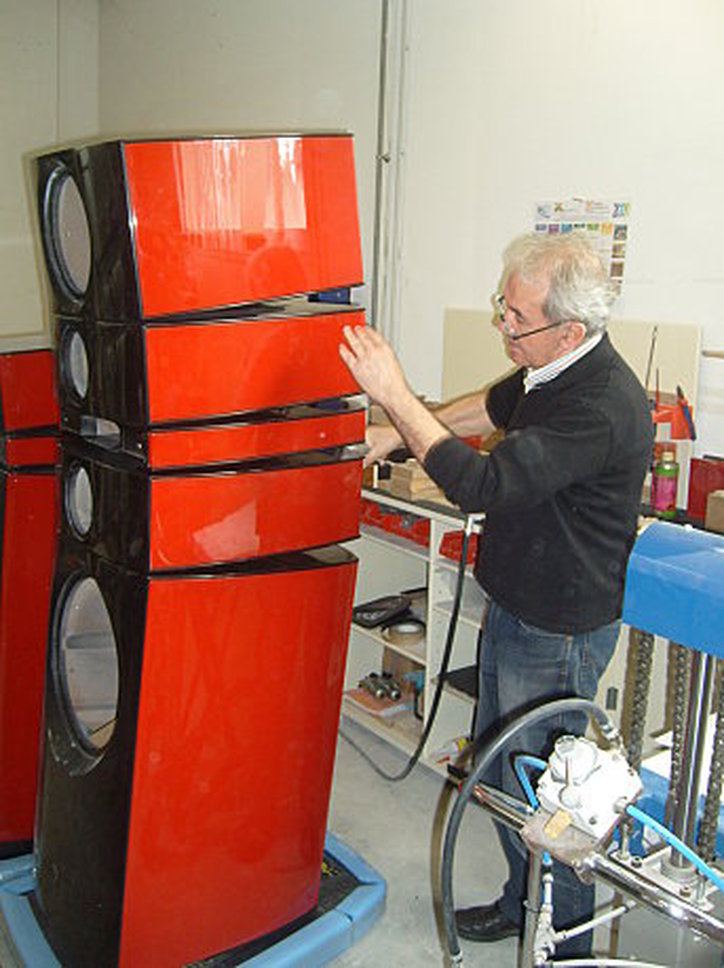 Jean-Paul Guy final inspection of a Focal Grande Utopia cabinets Over the next few weeks, I will go into each of the speaker companies that GUY.HF has manufactured over the years, and you will surprised to find out that even reputable companies outside France were clients, like Luxman, Toshiba, Sanyo, Fisher, Philips and Telefunken! I will be forever grateful to have been associated with GUY.HF and still counting Jean-Paul as one of my long standing friends. Stay tuned for more French Vintage Speakers! 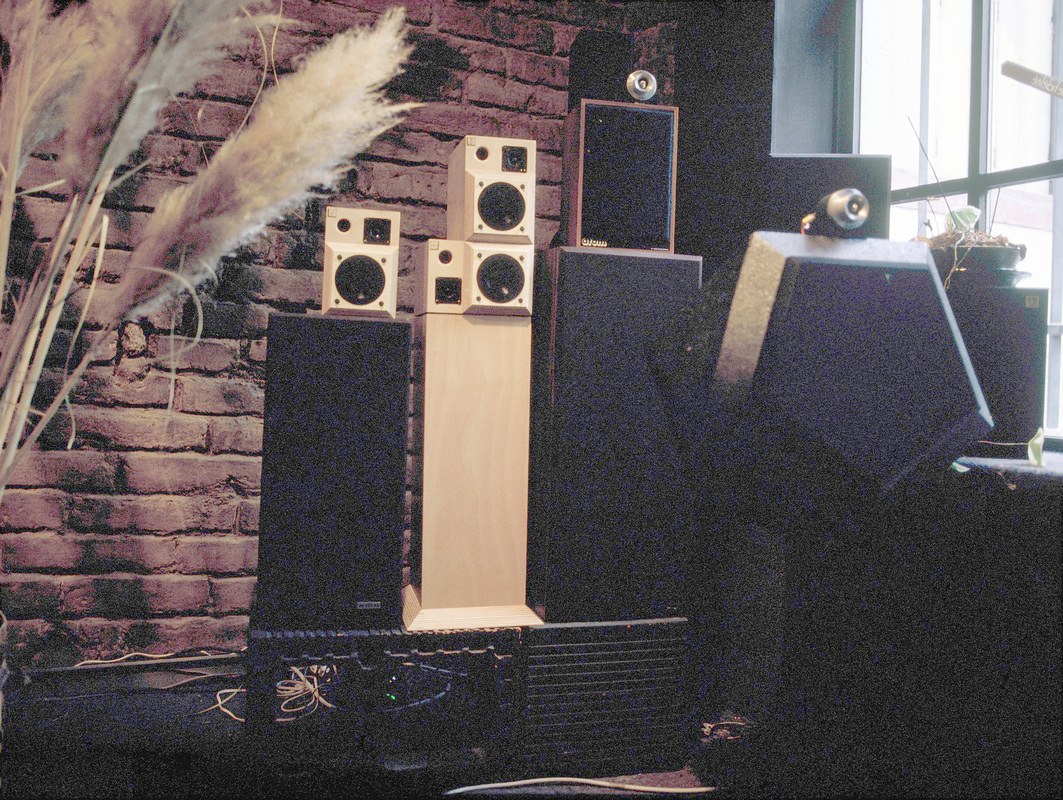 Our Microphase in good company at GUY.HF showroom in Bourbon-Lancy - 1986 - Note the earlier version of the subwoofer with the port only at the back 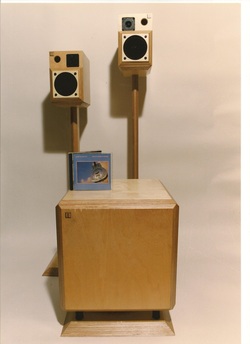 One of my friend and ex-HP colleague is selling his system after 25+ years of good service, because it is supposedly too big for his new "maison de campagne"...
And I thought we had designed it to be the most "WAF" friendly system on the Planet! "Des gouts et des couleurs, on ne discute point"... So, if any of you dear readers are interested in a pristine Triton passive system at a bargain price, here is your chance! If I were not so far away, I would buy it myself, as I do not have this system in my collection. Being in Australia would probably cost me more in shipping than the gear itself, although I am tempted! Anyway, to do justice to the product and help out my friend Philippe, I have posted a review of this wonderful triphonic system as an add-on to a previous post featuring the active version of this magnificent piece of french vintage hifi! You will find the review written by Patrick Vercher in the now defunct "Revue du Son" here: http://www.frenchvintagehifi.com/1/post/2011/07/microphase-triton-active.html Any enquiries are welcome via our "contact" form 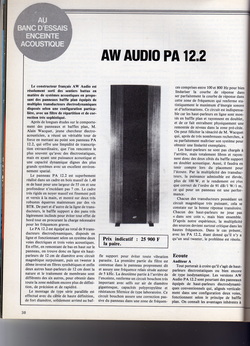 In April 89, the French magazine, La Revue du Son, published this review of the newest incarnation of the EA12 panel by AW Audio.
Called the PA12.2, it was a significant improvement on the original model. What this review reveals though for the first time, is some technical information about the construction of this outstanding speaker. And I had guessed successfully some of them...(see previous posts on AW Audio) First, all the full range speakers are in line, 2 on top of the tweeter, and six underneath. The tweeter is described as an inverted dome tweeter: at that period, only Focal was using that arrangement, so we can assume Alain Wacquet was using one... The full range speakers are mentioned as being 12cm in diameter, and one can assume that these would be of Audax origin. Although not exactly a D'Appolito arrangement, it certainly have a lot in common with it in terms of imaging and transient response. The tweeter is working only over 5KHz, and may or may not been time aligned mechanicaly, but certainly in the complex filter, as one main quality of these panels is their transient response. It seems also that an external filter is used to compensate for the acoustic short circuit in the bass region, inevitable consequence of a dipole speaker. My recollection of these speakers is that the bass spectrum, although not extended very low, was still believeable and extremely clean. Alain is a jazz enthusiast, and his demos always included fantastic percussions, which always came out of these panels as extraordinarily accurate. If I can quote Patrick Vercher and Jean Hiraga in their assessment of their performance, they compare these panels to electrostatic panels, the transcription of the music being "luminous", full of micro details, very respectful of instruments timbres. Again, my own recollection of these speakers is that voices were very realistic, specially female (Sade, very popular at the time, come to mind...) and the lower medium and upper bass region being perfectly reproduced due to the absence of box coloration. On small jazz formations and live recordings, you could hear the ambience of the venue, and one could easily feel being there - what any speaker designer is trying to achieve with various degrees of success! A few years later, Alain introduced the short lived "Transparence", probably the best way to describe his creations in one word. I am hopefully meeting Alain at the Paris Hifi Show next week-end and expect to get more first hand info on these unique speakers. A big distributor of audio and video products in France, DEA International, has revived the Elipson brand with some exciting new products like the 4260, a modern incarnation of the famous 4040. You can visit their site: http://www.elipson.com The 4260 is equipped with drivers made by PHL Audio, and designed by Philippe Lesage, the man who helped me customise the Audax driver I used in my SAT speakers. That a sure sign of a winner. I can't wait to listen to this new avatar of a classic! Stay tuned for more news... They will be exhibiting at the Salon Hifi & Home Cinema in Paris in a month time at the Pullman hotel. More details here:http://www.spat.fr/hifi/ DEA also distributes Canton, Ortofon, Perreaux, Shanglin and Thorens entre autres. 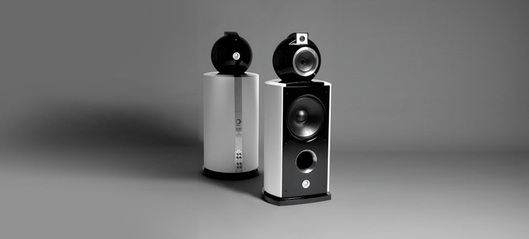 The cabinet As previously described in my last post, the cabinet was designed as small as possible to match a MIDI system and big enough to allow enough bass. The final dimensions were set as 200x200x150mm, giving us a 3.9 litres internal volume. The cabinets were provided as a mirror-image set. This is a bass-reflex arrangement with a 2.5cm diam, 4cm long port generating a -6dB point at 70 Hz. Because the voice coil is longer than the standard version, one can adjust the bass control on the preamplifier (sacrilege...) and extend the bass output down to 50 Hz without distortion at normal listening level in a small room - which was our target market to start with. We will discuss in a later post how we increased the bass output with the addition of subwoofer(s) We had been looking at various materials to build the cabinet, and apart from the obvious MDF, we wanted something that, once varnished, would show the material itself, so we settled on a very dense marine birch plywood, 15mm thick. We shopped around for a cabinet maker and Philippe Lesage recommended we talked to Jean-Paul Guy of Guy HF in Bourbon-Lancy, a small town in the centre of France, not far from St-Etienne, famous for its manufacture of weapons, and for us audiophiles, where Focal-JMLab and Jacques Mahul operate. Philippe had said to me that Jean-Paul was rarely taking new clients on, but that my design might interest him. It is quite a trek from Paris to Bourbon-Lancy, but after a few phone conversations, I decided to go with a pair of prototypes made in Paris. Jean-Paul asked many questions, listened to our product, and started suggesting a few modifications/upgrades and manufacturing tips: We were in! At the time, Focal had started 4 years before and was beginning to be a serious client for Guy HF, so much so that it ended up taking 49% of the shares in 2003 and bought the company over when Jean-Paul decide to retire. He is still a technical consultant and the factory is making the top of the range from Focal-JMLab today, as in the Utopia and avatars. One thing that Jean-Paul was an expert at, among other things, was the varnish: we never found anybody that could do a varnish that was not shiny, but smooth as an anodised aluminium finish. That gave our speakers an elegance that nobody else could match at any price.   The filter We chose a Linkwitz-Riley configuration because this 12 dB per octave crossover is designed to solve the problem of centering the main lobe of the forward radiation pattern of a two-way speaker system. This crossover is unusual in that each filter is down 6 dB at crossover (in this case around 5400hz, to avoid the resonance of the tweeter and take advantage of the full range of the bass/midrange driver) and that the two drivers are actually "in phase" at all frequencies when the drivers are wired in opposite polarity. That is, even though the filters have their own characteristic phase responses the phase difference between the two output signals is the same at all frequencies. As a result, each filter section has the same group delay. This crossover is recommended over the 2nd order Butterworth type due to its accurate summed frequency response and forward pointing main lobe. We also aligned the two drivers physically to adjust the time delay between the tweeter and bass/midrange driver. This also gave the cabinet its typical look, showing the structure of the plywood on the edge of the "pyramid" supporting the main driver, a very ancient Egyptian concept. This eventually translated into the name and the logo of the company. Here is a schematic of the filter and a photo of its implementation:  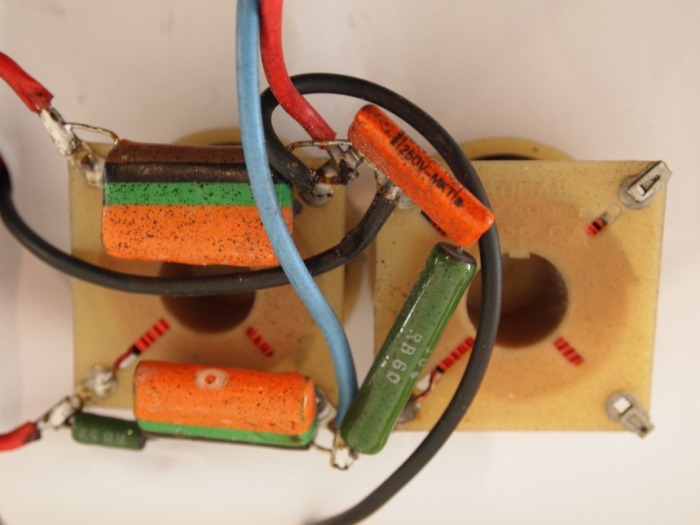 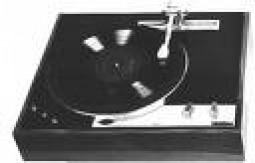 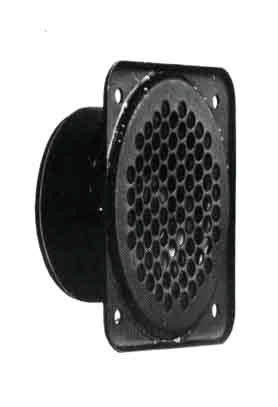 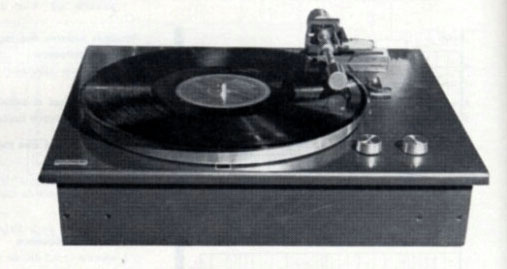 A Uni friend of mine was having a party in Poitiers - a mere 300kms away...- and asked me if I could produce the hardware for the sound sytem. He would organise the software, and provide us with travel money, accomodation and cost to build/rent the hardware. It was going to be a huge affair in a large reverberant hall at the Uni in Poitiers.
I can't remember what amplification I got my hands on, but I can remember visiting the factory of Pierre Clement, and imploring them for a "loan" of their new tangential arm turntable, and guess what, they agreed! Now that I think about it, I believe they also loaned me a Shlumberger Broadcast amp destined to the ORTF. For more info on this product check this excellent website (time to sharpen your French...)http://www.audiofolia.com/clement.php Most readers would know that Sclumberger gobbled up Pierre Clement soon after I suppose it is a case of "follow your passion" and it will take you anywhere... The next step (and time wise, it was the first one) was to build 20 identical speakers. I had in mind that if I could make these speakers in raw MDF, I could them finish them to any finish and sell them afterwards. Some ended up lacquered in white, or black or red. (remember, we were in 1972/73...) They were designed to be a cube of 30cm when fitted with a grille (always black) on top to hide the tweeter. Equipment was a full range 17cm from SIARE, and a TW8 from Audax of Elipson's fame- aluminium dome, apparently good up to 40khz. The filter was a simple 2.2uF capacitor for an 8KHz cut-off frequency. The tweeter was time aligned to the main driver. So, here I am with a very expensive turntable and amp (probably six months of my salary at the time...) 20 speakers (sans tweeter to save space and risk of destruction) , the GF of the time, all to be fitted into a Peugeot 205 Convertible, and torrential rain in a 6 hour drive (no freeway past the outskirts of Paris then) We arrive in a fairly angry/exhausted mood to discover that accomodation was going to be a very bare student room, and too late for dinner. We managed to get a good breakfast the next morning and by mid afternoon, we set up the whole system, and it worked fine all night and the fact this was all in mono did not bother any of the dancers. We dismantled after the party, packed everything in the car and managed a good night sleep before driving back to Paris the next day. I ended up selling all these speakers, including a few pairs to a vinyl pressing factory that used them as monitors in their QA department, because of their amazing image and detailing. I am afraid I don't have any photo of this early design. If you happen to have one, or think you have, get in touch, please! |
AuthorBorn in France, well travelled, relocated to Sydney in 1997.  Archives
July 2023
Categories
All
|
 RSS Feed
