 Behind this simple logo hides more than 70 years of expertise in building modern furniture for famous designers of the time, some of the first TV cabinets and later on specialising in speaker cabinets for the most prestigious names of the French HiFi scene like Elipson, Jean-Marie Raynaud, 3A, A2T, Audax, AudioAnalyse, Audio Reference, Confluence, Elipson, France Acoustique, Mercuriale, Phonophone, Siare and for JM Lab/Focal, a collaboration over 30 years, Focal eventually buying the business in 2007. What an achievement for Emile, the father, and his son Jean-Paul Guy from the tiny city of Bourbon-Lancy, home to just over 5000 people but famous from Antiquity for its spa. GUY.HF is only one of two companies listed on Wikipedia in the town! Jean-Paul Guy who I have known since 1983 has benefited from growing up in a rich cultural environment because of the trendy original clients of his Dad, like the famous interior designers Leleu Marcel Gascoin and Maxime Old. Jean-Paul is a serious melomane and a great collector of modern art with a collection of over 600 pieces which he occasionally lends to museums for specific exhibitions. An hedonist, he loves all the finer things in life... He is also a speaker designer in his own right and was developing some products very similar to my Microphase around the same time, hence probably why he accepted to build our products. As proof, you will find below some extracts of his catalogues, some products being sold under the GUY.HF brand and some more elaborate ones under the "Natural Sound" brand. 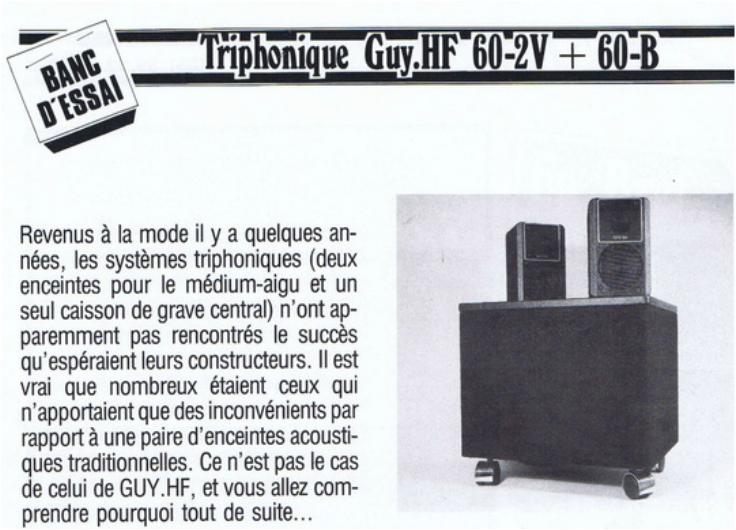 GUY.HF Triphonic System - 1982 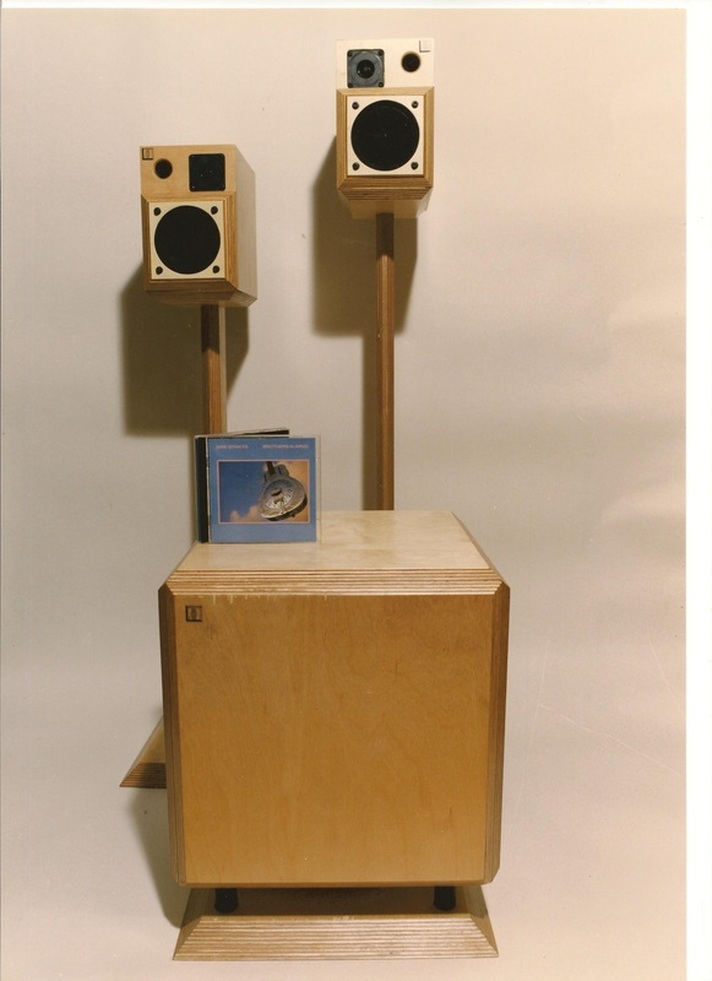 Microphase Triton System for comparison - 1984 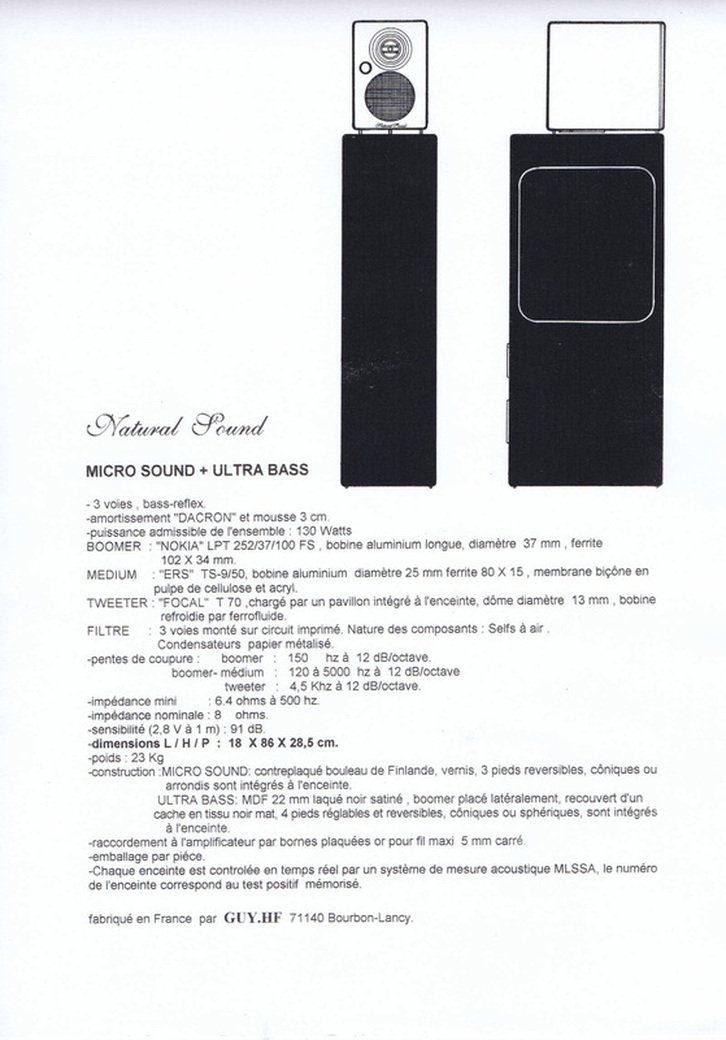 GUY.HF "Natural Sound" system - 1982 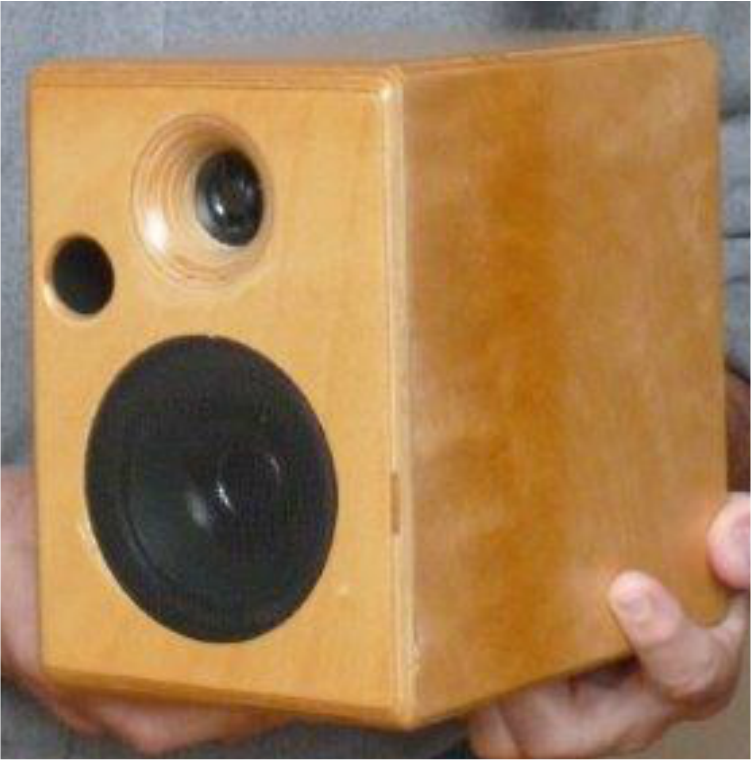 A revised version of the"Micro Sound" after the demise of Microphase 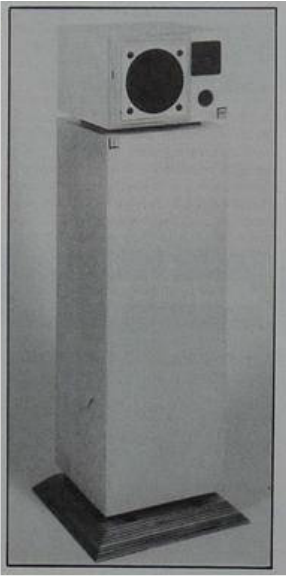 Microphase SAT+SWS system - 1984 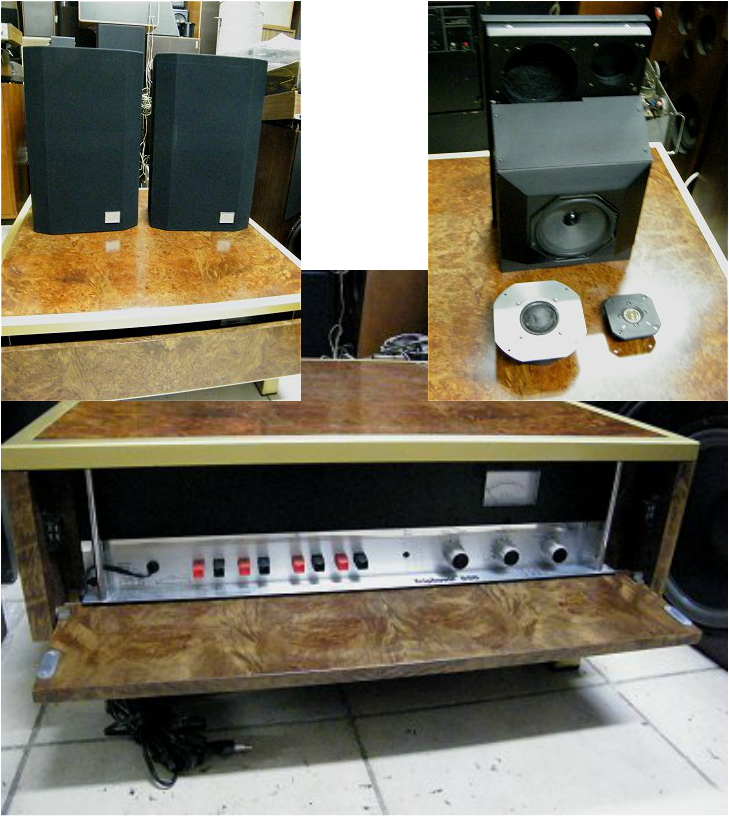 3A Triphonic System 800 + Atom satellites - Photos courtesy of Hifi Antique circa 1980 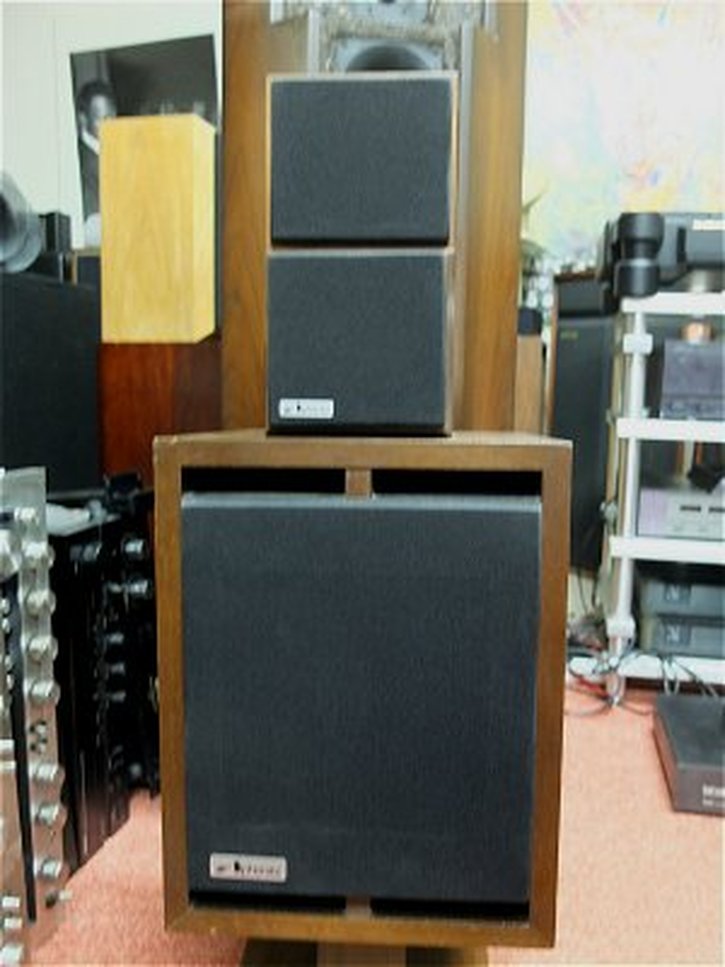 Another similar concept by Alpheratz - Photo courtesy of Hifi Antique - circa 1980 I find interesting in retrospect that we were all trying to replicate the 4240 from Elipson on a smaller scale and for less money. In many ways, most of these systems actually achieved this objective with very limited means sometimes and as a result, these companies didn't stand the test of time. But most importantly, GUY.HF and Jean-Paul were instrumental in helping these small outfits getting manufactured properly at a price which leaved them with enough margins as well as staying competitive in the retail market. Jean-Paul was also very helpful in streamlining the manufacturing process by advising us on ways to save money without too much compromise on the final auditive and visual results.Un grand merci! 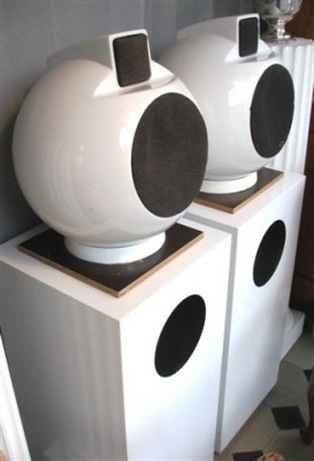 the famous Elipson 4240 - 1970s - my first love! All this quality manufacture was achieved without any CNC machines which arrived at GUY.HF only in 1987 when production reaches over 15,000 speakers. A second machine was bought in 1999 to accommodate the big success of the Utopia range from Focal representing half the production and all this achieved with less than 30 people! One skill that GUY.HF had and still has is the quality of their varnishes, perfectly applied and never too glossy in the case of the clear finish. Lacquer was subcontracted to a local company Segaud, which was later bought over and integrated into the larger premises acquired in 2003. If you have ever seen a Focal Grande Utopia in the flesh, then you will have experienced both the cabinet making and the lacquer expertise of Jean-Paul's team! 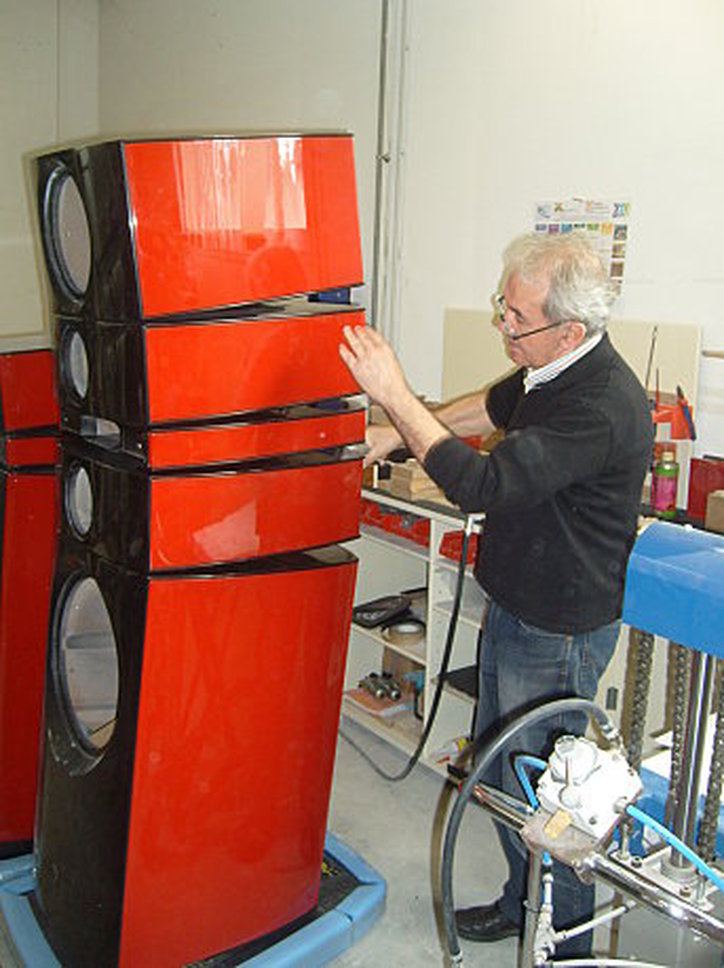 Jean-Paul Guy final inspection of a Focal Grande Utopia cabinets Over the next few weeks, I will go into each of the speaker companies that GUY.HF has manufactured over the years, and you will surprised to find out that even reputable companies outside France were clients, like Luxman, Toshiba, Sanyo, Fisher, Philips and Telefunken! I will be forever grateful to have been associated with GUY.HF and still counting Jean-Paul as one of my long standing friends. Stay tuned for more French Vintage Speakers! 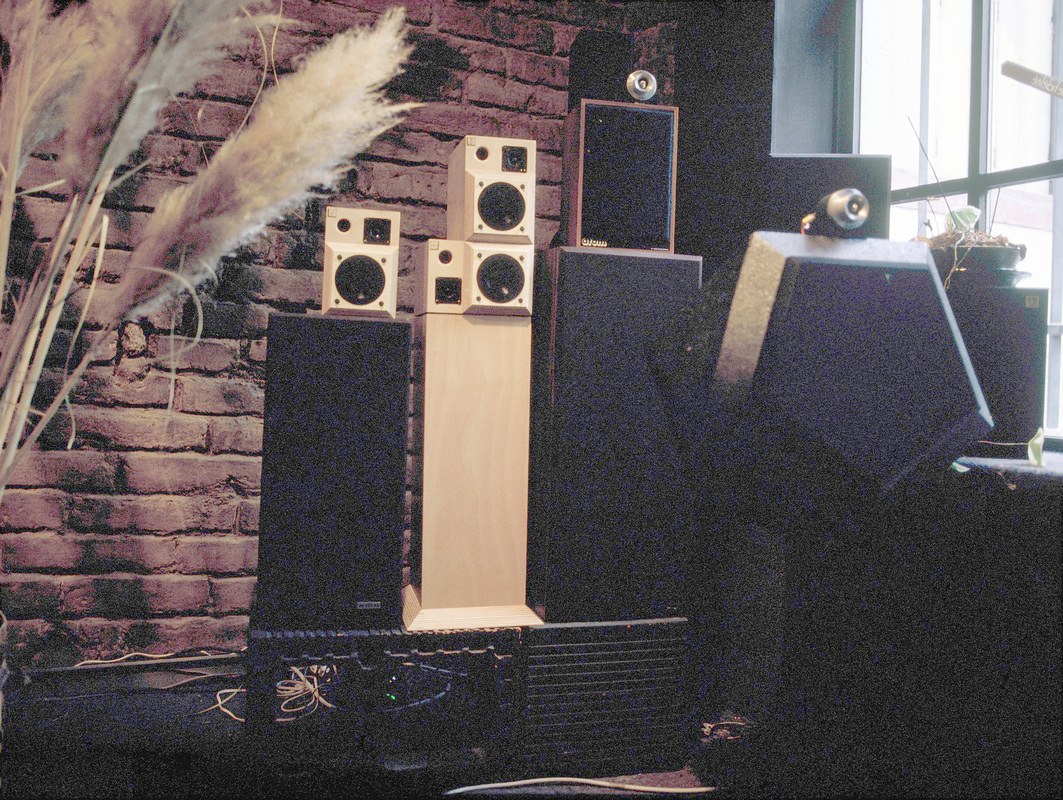 Our Microphase in good company at GUY.HF showroom in Bourbon-Lancy - 1986 - Note the earlier version of the subwoofer with the port only at the back 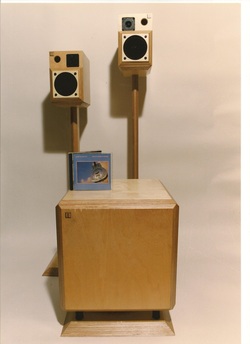 One of my friend and ex-HP colleague is selling his system after 25+ years of good service, because it is supposedly too big for his new "maison de campagne"...
And I thought we had designed it to be the most "WAF" friendly system on the Planet! "Des gouts et des couleurs, on ne discute point"... So, if any of you dear readers are interested in a pristine Triton passive system at a bargain price, here is your chance! If I were not so far away, I would buy it myself, as I do not have this system in my collection. Being in Australia would probably cost me more in shipping than the gear itself, although I am tempted! Anyway, to do justice to the product and help out my friend Philippe, I have posted a review of this wonderful triphonic system as an add-on to a previous post featuring the active version of this magnificent piece of french vintage hifi! You will find the review written by Patrick Vercher in the now defunct "Revue du Son" here: http://www.frenchvintagehifi.com/1/post/2011/07/microphase-triton-active.html Any enquiries are welcome via our "contact" form 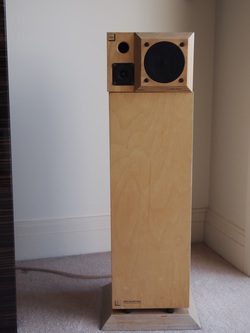 As mentioned in our "7 design principles", we think the midrange driver should be as close as possible to a full range unit. However, if you are trying to keep the cabinet small and, consequently, the WAF high, then you will need a dedicated driver for the lower octaves of the spectrum. Hence, our SWS subwoofer design... The idea was to have a modular offer: one could buy a pair of satellites as bookshelf speakers, and then later, when money and/or space become available you could add the subwoofer(s) to your existing speakers. Interestingly enough, very few customers took advantage of this feature. Most bought either the satellites on their own, or the full system. So, to come back to the design of the subwoofer, it was to be like a pedestal to the SATs and we decided early on that the driver would be invisible, as we wanted the SAT to be the main design feature. So, we were constrained to a 200x200mm envelope and between 700 and 900mm height to bring the SATs to ear level. The SATs themselves would be used horizontally in this configuration. This was made possible by the fact that the tweeter was offset from the midrange and once horizontal, the dispersion pattern would still be good. This is confirmed by listening tests: these speakers have an excellent image way beyond their own position, and providing quite a wide range of listening positions. The SATs are 150mm high, then it leaves us between 550 and 750 mm for the subs. Once the driver was chosen and we could plug its parameters into our box calculation, we ended up with a 600mm high cabinet. The driver firing down would then be at the mercy of the floor material, and we didn't like that, hence the special socle with a pattern to match the angled design of the satellite, adding some extra stability to the whole unit. That was going to be tested in years to come by the toddlers in our household... The driver was originally an SEAS 17cm with an extra rubber treatment on the membrane. Further down the track, we used a SIARE unit. The filter was again a Linkwitz-Riley with an upper frequency of 100hz L=25mh (air core), C=100uF (made out of 4x25uF in parallel for better quality. The final response being 30-100Hz within 1dB, thanks to the mechanical feedback of the base, close enough to "laminate" the air, hence linearising the response. This is quite an amazing result from a 17cm driver. The integration with the satellite is seamless and also prevent the satellite to generate too much distortion at the low end. The only drawback is obviously a little loss of efficiency as a complete unit, but still in the 90dB range. Later on, we designed a central subwoofer, starting the triphonic fashion, way before Bose entered the market...but this is another story for a later post... 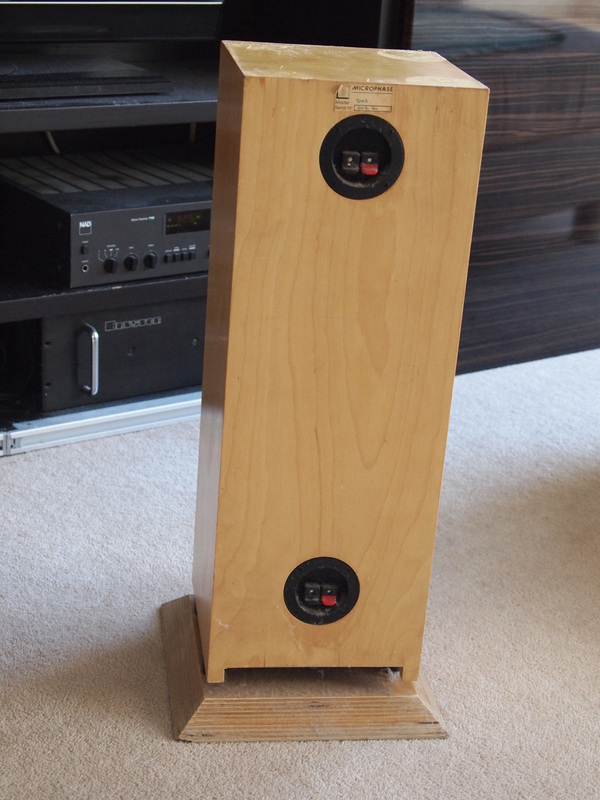  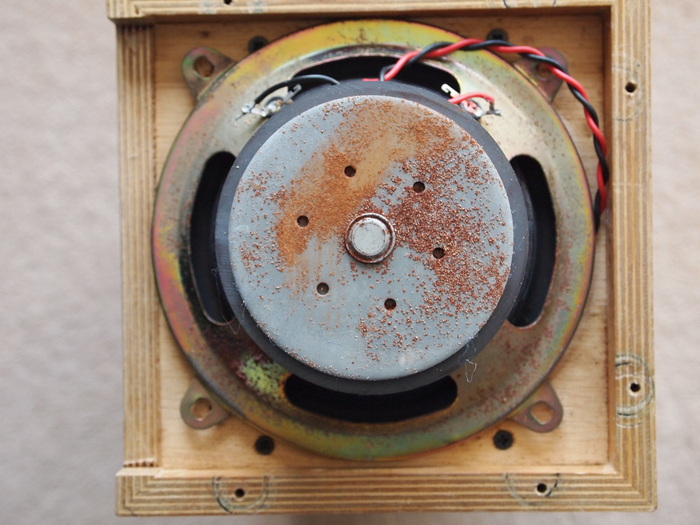 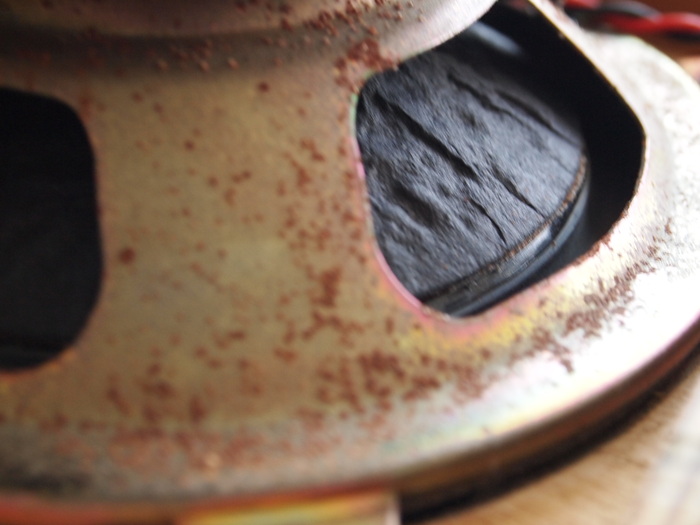 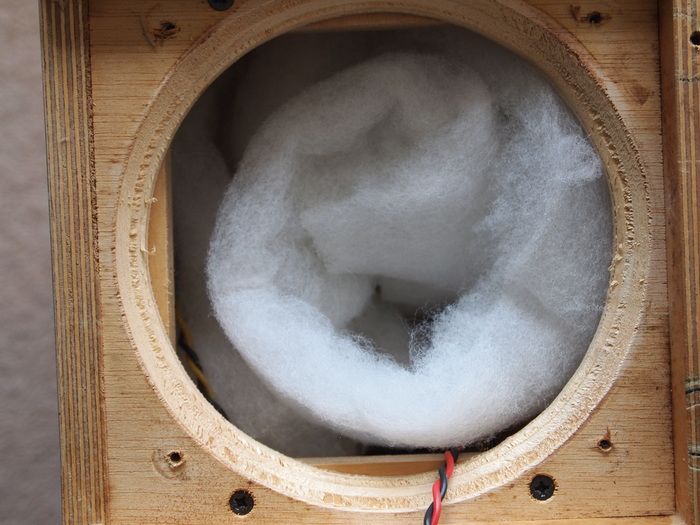 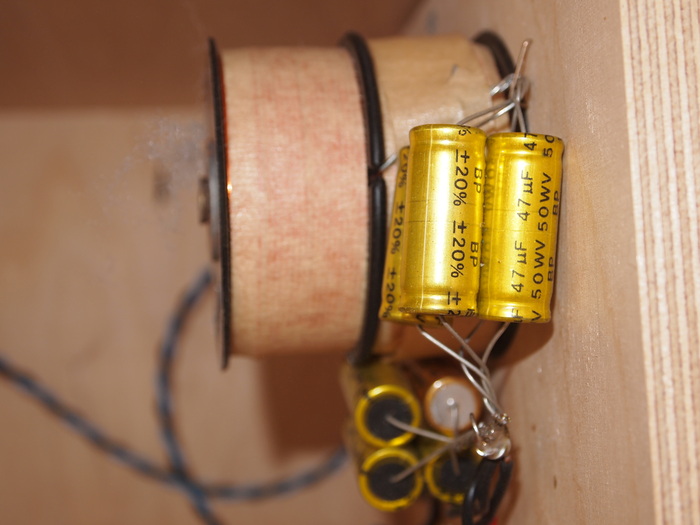   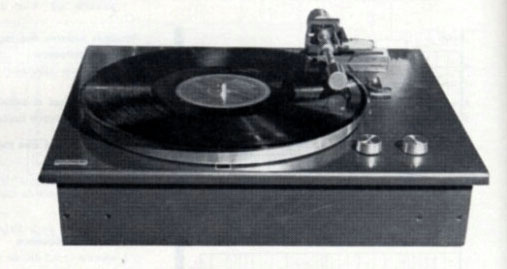 A Uni friend of mine was having a party in Poitiers - a mere 300kms away...- and asked me if I could produce the hardware for the sound sytem. He would organise the software, and provide us with travel money, accomodation and cost to build/rent the hardware. It was going to be a huge affair in a large reverberant hall at the Uni in Poitiers.
I can't remember what amplification I got my hands on, but I can remember visiting the factory of Pierre Clement, and imploring them for a "loan" of their new tangential arm turntable, and guess what, they agreed! Now that I think about it, I believe they also loaned me a Shlumberger Broadcast amp destined to the ORTF. For more info on this product check this excellent website (time to sharpen your French...)http://www.audiofolia.com/clement.php Most readers would know that Sclumberger gobbled up Pierre Clement soon after I suppose it is a case of "follow your passion" and it will take you anywhere... The next step (and time wise, it was the first one) was to build 20 identical speakers. I had in mind that if I could make these speakers in raw MDF, I could them finish them to any finish and sell them afterwards. Some ended up lacquered in white, or black or red. (remember, we were in 1972/73...) They were designed to be a cube of 30cm when fitted with a grille (always black) on top to hide the tweeter. Equipment was a full range 17cm from SIARE, and a TW8 from Audax of Elipson's fame- aluminium dome, apparently good up to 40khz. The filter was a simple 2.2uF capacitor for an 8KHz cut-off frequency. The tweeter was time aligned to the main driver. So, here I am with a very expensive turntable and amp (probably six months of my salary at the time...) 20 speakers (sans tweeter to save space and risk of destruction) , the GF of the time, all to be fitted into a Peugeot 205 Convertible, and torrential rain in a 6 hour drive (no freeway past the outskirts of Paris then) We arrive in a fairly angry/exhausted mood to discover that accomodation was going to be a very bare student room, and too late for dinner. We managed to get a good breakfast the next morning and by mid afternoon, we set up the whole system, and it worked fine all night and the fact this was all in mono did not bother any of the dancers. We dismantled after the party, packed everything in the car and managed a good night sleep before driving back to Paris the next day. I ended up selling all these speakers, including a few pairs to a vinyl pressing factory that used them as monitors in their QA department, because of their amazing image and detailing. I am afraid I don't have any photo of this early design. If you happen to have one, or think you have, get in touch, please! 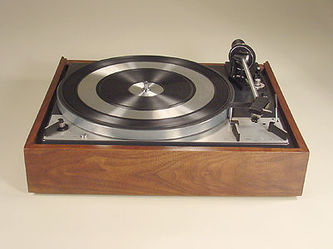 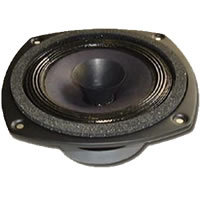 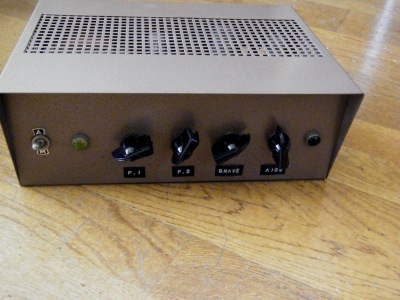 When I was at Uni - and still living at home, as most students did at that time - my passion developed further, and I was keen to use my new found knowledge - I was studying for a BSc in Electronics - to build my first hifi system.
Coincidentally, my sister and I were gifted a DUAL 1219 turntable for Christmas, so I decided to get down to work. My budget being quite limited, and having settled for a full range high efficiency speaker and valve amplifier, I went shopping... I was confident I could design and build a solid state preamp, so I did, but for a strange reason, I didn't feel confortable designing the amp from scratch, so I went and bought a kit from Cibot Radio and assembled it myself, crossing fingers that I would not put the house on fire on first power up. As I am still here to tell the story, you have your answer...an added bonus though was that my room was always a couple of degrees Celsius warmer than the rest of the house, as you wouldn't switch that amp off, would you? It was quite an ugly thing in military green lacquered perforated metal for the cover, but the sound...ah that glow in the valves transcribed itself in velvet music! Even my crude preamp could not ruin the sound... For the technically inclined, it seems that this was the valve configuration: 2xel84;2x12ax7;ez80, but it is a while back, so I can't be sure. If anybody has more information let me know via our contact form or the comments function. Thanks in advance. Now, for the speakers, I used a full range 17cm drive from SIARE in a closed box made of MDF and filled up with wool bed covers kindly given by Mum... At the time, Michel Visan was the technical director of SIARE. He ended up starting Davis Acoustics, who continues to make some full range speakers inspired by the ones he designed for SIARE - see photo above. We ended up quite good friends and I would use some of his paper cone woofers in future designs, but more on that later. I have never been a fan of Kevlar which started to be the rage in the 80s, when both Jacques Mahul at Focal (ex technical director of Audax and arch rival of SIARE, and Michel Visan at Davis Acoustics introduced drivers using this "space age" material. I still believe paper cones have the ability to sound better than any thing else for the midrange, as they respect the timbre of instruments better. The whole system was housed in a white laminate "structure" with the amp on one side, the preamp and turntable on the other side to avoid picking up rumble from the amp, a desk in the middle and the "legs" containing the speakers at the top and some space at the bottom for records stored vertically (bien sur...). I will try to find a photo from my parents archives or else, I will make a drawing of it (but do you really care...?). This system kept me happy for quite a while, until I came across the Elipsons and Supravox. But that will be my next story. |
AuthorBorn in France, well travelled, relocated to Sydney in 1997. 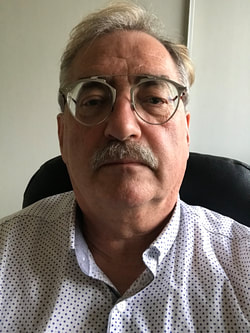 Archives
July 2023
Categories
All
|
 RSS Feed
