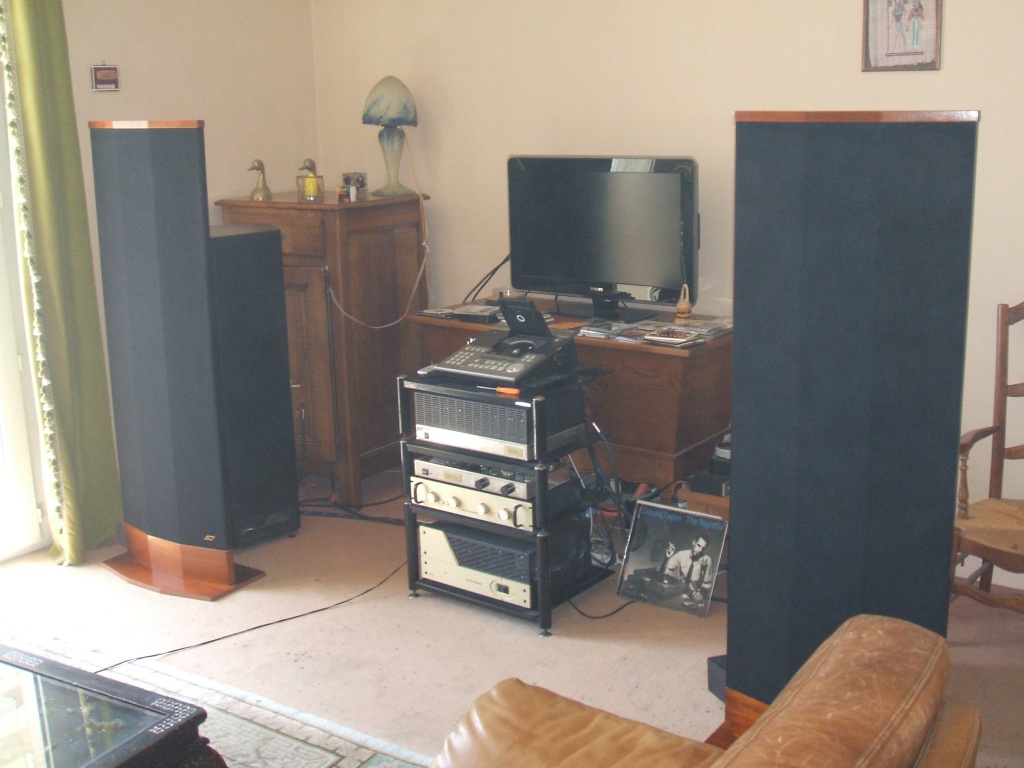
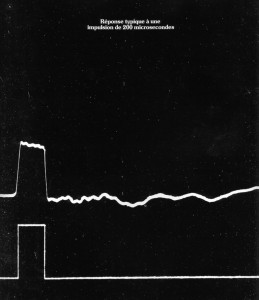
 AW Audio electrodynamic panels EA12 chez Raymond Lerat I have been communicating with Raymond for quite some time as he is the lucky owner of a pair of EA12 from my friend and fellow speaker designer Alain Wacquet. Raymond has also been helpful in providing information for my article on Confluence. He has just posted a comprehensive review of these fabulous speakers on the forum Audio Vintage and has kindly given permission to rewrite and translate his prose in English here. For those of you who read French and want to read the original post, here is the link: http://www.audiovintage.fr/leforum/viewtopic.php?f=20&t=56039 My notes are in italics in the text below EA12 presentation by Raymond Lerat - The English version Raymond Lerat had the pleasure to meet with Alain Wacquet in Nancy chez Audio Video Son in the mid 80s. He found him affable and full of humour with a smile on his face, and passionate about music with a penchant for jazz, and a composer himself, up to this day where he indulges in more esoteric compositions with prepared instruments and noises. He was born near Lille in the Northern part of France, close to the Belgium border. (This is where I met Alain...) Raymond first interest in presenting these panels to the Forum was to gauge the level of knowledge, interest and exposure that the members of the forum might have with this confidential range of vintage speakers from the early 80s. Raymond notes that all people he knows who have been exposed to AW speakers were all enthusiastic about them, specially when reproducing jazz ensembles and small classical formations where they excel. Their main characteristic been described as "energetic", with a real sense of "beeing in the room" and with perfect imaging and spatialisation. All reports written over the 10 years of research by Raymond have all returned an "enthusiastic" response. The way Raymond describes his first encounter with AW Audio fells short of a "love at first sight" declaration, but like often, the object of ditto love seems unreachable financially and is left confined to the realm of dreaming...until such a time where it suddenly becomes accessible. Raymond goes on to describing various experiences with other panels, like Magnepan, Stax, Audiostatic and Quad, products which were not lacking in anything, but which would actually add undesirable things, in his opinion. With Magnepan for instance at the time, the image of a piano might have been stretched to 15m or so, within an orchestra which would feel like 20m wide, so the proportions of the sonic image was distorted. Inadequate dynamic range, lack of the bottom octaves, short circuit between front and back fields made it near impossible to position the panels for the best results in a given space. Lansing Trimline, DCM Time Frame, Carver in the US, Phonophone, Triangle in France have tried to use electrodynamic drivers to design such a type of speaker with various degrees of acoustic success, but no commercial one. Alain Wacquet managed to stay in business for over 10 years, while producing a "haute couture" type of product, made by hand, with love and exceptional craftsmanship, hence expensive. The objectives and typical qualities of an electrodynamic panel are a credible horizontal and vertical image, with a cylindrical polar response, providing a stable, accurate and homogenous response and image. The impulse response - slew rate - will have to be exceptional, vastly superior to any other system, with a very good reproduction of timbres, the hallmarks of an acoustic doublet system. The use of a linear array of mostly identical small full range drivers will provide such result if they are correctly implemented. If not, the result will be like a "sonic porridge" as Raymond nicely puts it. NOTE: I have found this measurement from a LEEDH Perspective designed by Gilles Millot, using the same driver as a midrange. This shows the exceptional impulse response of the main driver used by AW Audio, a WFR12 from Audax. It is to be noted that 6 12cm drivers have an equivalent surface to a 300m woofer with half the mass...But the resonant frequency would be about double, hence why the lower octave can't be reproduced at the same level as a 300m woofer which fs would be around 30Hz.
Obviously, it will be expected that the lower octaves of the audio spectrum will be somehow reduced in level, but still extremely clean because of the speed provided by the light membranes of the drivers, but also by the acoustical short circuit between the front and rear waves. Trying to add a subwoofer often results in a bad marriage, which Raymond describes as trying to mate a carp and a rabbit! Raymond has experimented with electrostatic and isodynamic panels over time but found them lacking inefficiency, and dynamic range, qualities required to give life and freedom to the music, a treat that a boxed system cannot achieve. For these reasons Raymond had abandoned his quest, even though he owned a pair of QUAD ESL 63 in the 80s.
The various advantages of a panel speaker compared to a box speaker A bit of history - You might want to read my own articles on the timeline of AW Audio The AW Audio adventure started in 1985 after two years of research prior, resulting in the introduction of the EA12 first panel, then the less expensive EA11 and finally the outstanding EA16 which only 10 pairs have been sold. Later the EA12 would be replaced by the PA12 and there are a few units of the ultimate Transparence (in Alain's basement...) all this over a 10 year period and through a handful of dealers around the country. Raymond didn't get a chance to listen to this second generation of panels, which seem to carry the same drivers, although they are no longer locked behind the fabric. (neither did I...) Obviously, the difficutiles of marketing and selling such a boutique range of products of such high quality, superb finish, designed by a passionate and uncompromising man such as Alain was not a piece of cake, having to abide by the rules of greedy esoteric and high end dealers, (being used to extravagant margins to push such a product and others..) Raymond goes onto explaining some of the reasons behind Alain's decision to abandon the project although all public demos were all spectacular and well received in comparison with similarly priced products at the time. Essentially, it was extremely difficult to transform all these marketing efforts into sales. (I have witnessed a number of these demos and they are amongst the best I have ever heard at any price... It took me decades to find something better, and you probably know that I am referring to my friends at Kyron Audio here!) Raymond goes on to compare the experience of listening to an AW Audio panel to the degustation of a Grand Cru wine, as it stays with you for the rest of your life either on the palate or in your ears. (Obviously, you can rejoice time and time again to the pleasure of listening to a pair of good speakers, difficult and somehow far more expensive to keep drinking bottles of Ducru-Beaucaillou 1982, my all time favourite wine, if you can find some, that is...). The relation between cost of manufacturing and sale price is quite similar in both cases... To calibrate the topic, a pair of EA11 cost 15500 francs, EA12 25000 Francs. EA16 50000 francs. (The dealer was probably buying them for less than half that price, and a pair of EA12 was equivalent to my generous monthly salary at Hewlett-Packard..., so Alain would have to sell at least two pairs a month to barely survive!). A pair of EA12 was sold at the same price as a pair of Confluence "Pastorale" designed by another atypical engineer, musician, music lover and passionate.
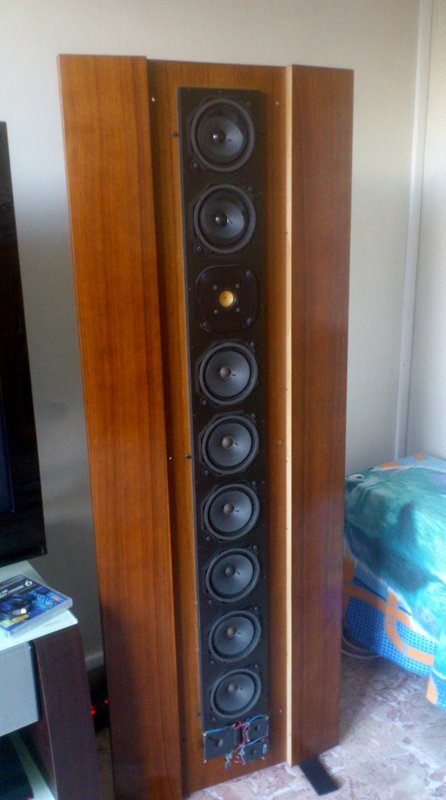
Alain Wacquet had some serious criteria and objectives to design his panels: linear phase, homogeneous polar response, slew rate and extended dynamic range, timbres accuracy and enough bass in such a dipole setup, maybe not as deep as a traditional box speaker, but certainly cleaner in many aspects. The AW Audio panels had very few rivals at the time with these parameters in mind. Alain has never unveiled anything much about the crossover schematic, nor the treatment of the midrange drivers, but one can see that 8 drivers (WFR12 from Audax) were used in line, the two top ones have some treatment applied and are dedicated to the midrange, the six at the bottom are the bass drivers. A Focal tweeter takes care of the higher frequencies. It is a 2-way electrically but three way acoustically. The coherence and balance of the system are outstanding (The quality of the voices, male or female and accuracy of the timbres particularly on percussions were astonishing and Alain was a perfectionist when it came to choose the music that would put the best out of his speakers... At some hifi shows where we were both exhibiting, I would sometime abandon my own stand to delight myself in Alain's demos...). The AW Audio panels are quite easy to set up, specially compared to other types of panels, when it comes to spread and tilt as well as distance from the walls. A reasonable power amplifier is enough as the efficiency of these speakers is around 91db/1w/1m. Even a valve amplifier will be a good match, bringing out all the qualities of the panels on vocals and small musical ensembles. Listening test In a few words, the general impression left by listening to the EA12 is one of balance, with an image as wide as it is high and deep with a great sense of precision, without halo around the instruments, with no listening fatigue. The differences between live or studio recordings are well articulated as there is no fuzzyness attached, giving the impression of space between the various instruments, what can be expected of a panel speaker versus a traditional cabinet of the same quality. Percussions are very realistic, the brass are physical, and the strings are very quick, all timbres rendered with accuracy, speed and finesse, the vocals are superb, palpable... The bass is as speedy as the upper spectrum, there, with a sense of freedom, it breezes... All listeners agree that, even though the very bottom part of the spectrum is not present, the quality of the bass is second to none, not withstanding much larger box speakers. Having bought the Confluence "Pastorale" two weeks after getting the EA12, Raymond had extensive comparative listening sessions over the last two years. The EA12 excel at jazz and classical small ensembles with their imaging, finesse and precision, still providing a big sound even at low volume On the other hand, the Pastorales are more polyvalent, specially if one listens to pop, rock or soul music.. (I am tempted to disagree with Raymond on this, being a great lover of small speakers, where imaging, precision and finesse are more important than a lot of bass. In many ways, AW Audio and Microphase were very similar in their objectives and were both very accurate and quick, with a great imaging, hence why we became friends quite naturally). Each speaker brings its own character to the party and that is why so many people design speakers as it is still the realm of some "black magic", definitely an art form. Raymond goes onto stating that his "graal" for listening at home still favours high efficiency and dynamic range over other criteria, implicitly giving the preference to AW Audio. It is worth noting that the EA12 and the Pastorales are in the same price range, hence there is a valid point in comparing the two systems. Raymond concludes by saying he was very lucky to find a pair of EA12 to buy, almost 30 years after having first seduced by Alain's demos and contraptions, as most owners of AW Audio panels tend to keep them for themselves. And I would agree with that statement 100%! 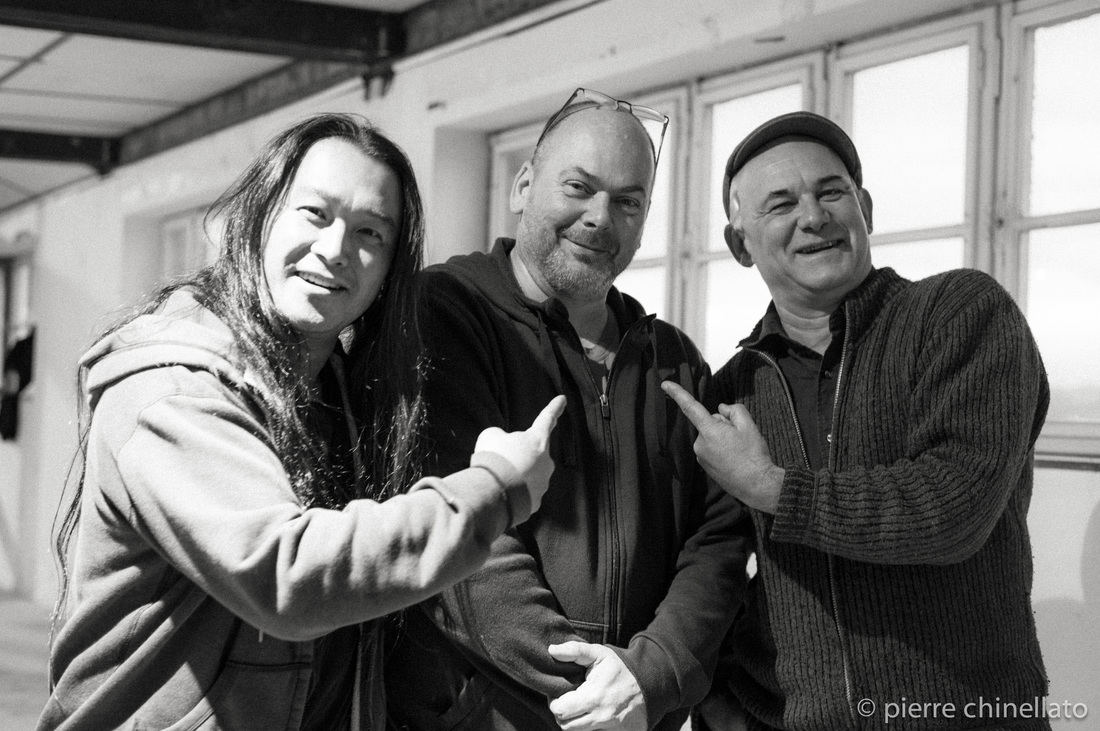 A relatively recent photo of Alain Wacquet with two of his musician friends And I just received my numbered - 530 - copy today!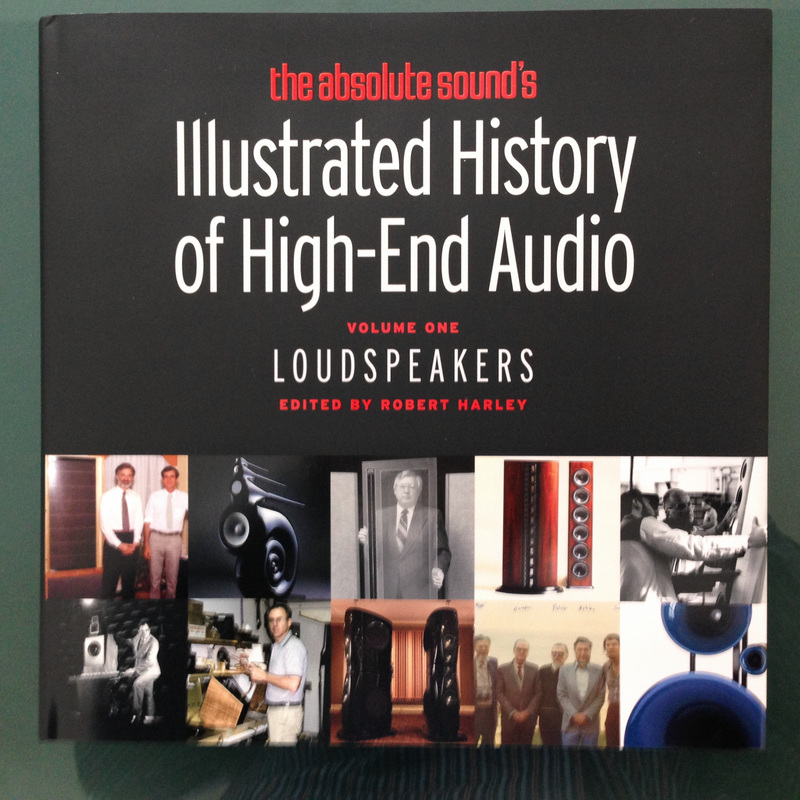
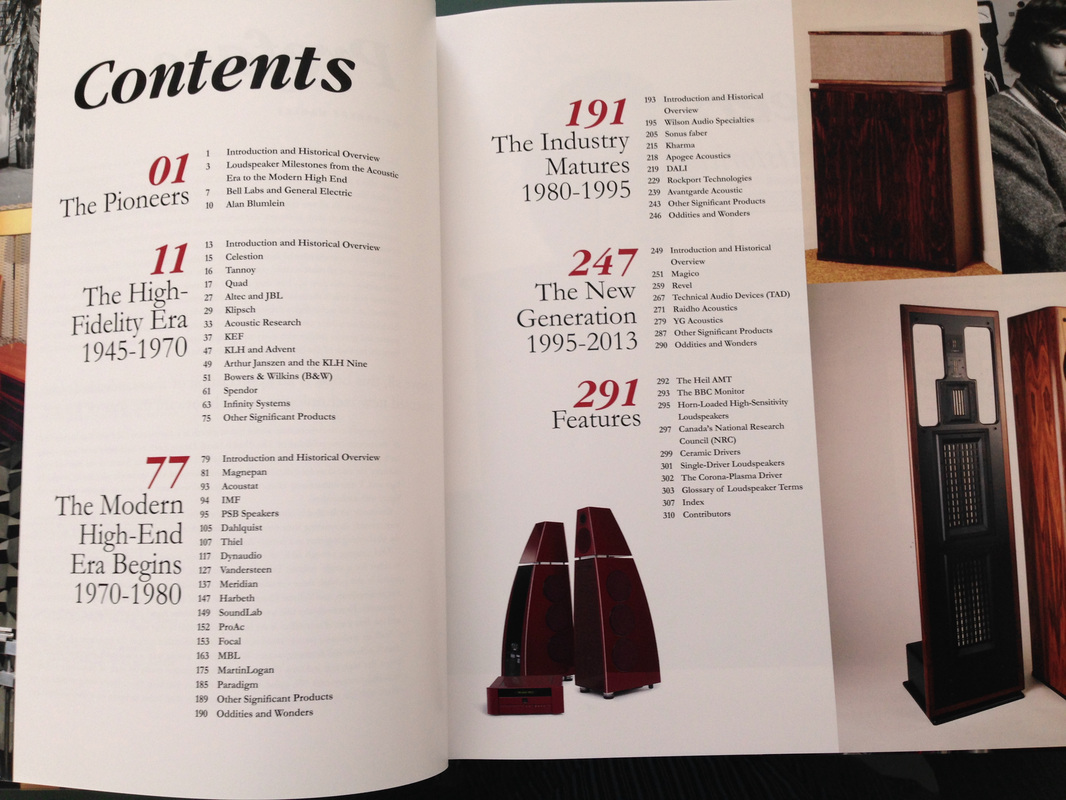
It is a beautiful book and I did what we all do, look at the pictures first and read a few articles, before digging deeper into the thick of it! Only Focal made it to the book in terms of French manufacturers, with a very good interview of Jacques Mahul. Cabasse is briefly mentioned in the "Oddities and Wonders" section! No trace of Elipson or Charlin, brands that were never exported to the USA and obviously of no or little interest to our American colleagues... The book focuses mainly on famous American and British brands and is well structured, with many timelines and good stories, some unknown to me, like the fact that Lansing committed suicide over the threat of bankruptcy! Beautiful photos and archival documents are smartly presented in a dynamic and clean format. I have started reading a few interviews of some of the still alive and famous designers and can't wait to go through all of them! I will keep you posted on any other anecdote or piece of trivia that I will find interesting over the coming weeks. 
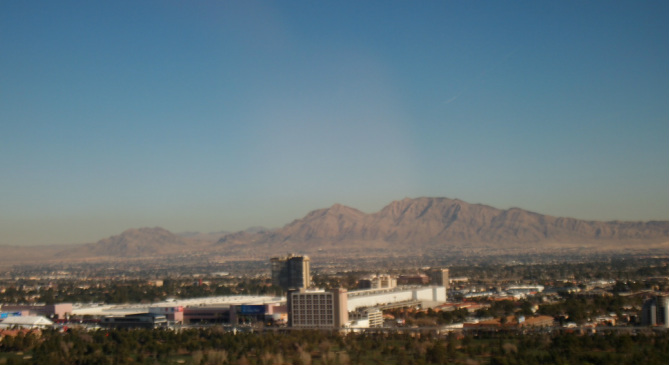
Beautiful winter day in Las Vegas
Bryston/iTrax/Thiel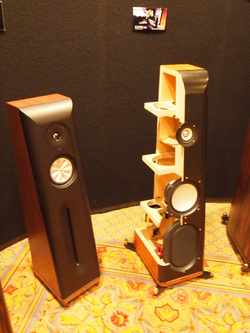 You will probably agree that I have milked the CES franchise for a bit too long as the CES 2013 is in a couple of days... So I thought I would recap here what speakers I really liked or discovered at the Show. I am not going this year, as I am going for a short trip to France to see my family and take care of my children that are or will be in Paris for their studies on an exchange from their Australian Universities. Hopefully, I will have some time (between Cotes-du-Rhone and Camembert...) to research there some more French vintage products and I can entertain you again "on topic! And to stay on my favourite brand, here is a shot of the new Thiel speakers on the Bryston stand (ah,ah, you didn't see this one coming, did you?). The combination of Bryston amplification, 24/192 multichannel live recordings from iTrax and matching Thiel monitors and subwoofers ended up being one of the most sensational demos at the Show. Electrocompaniet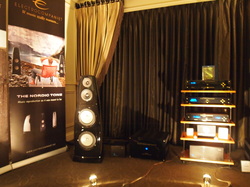 We are all familiar with the beautiful Nordic sound of Electrocompaniet electronics. They evemn make their own version of the OPPO player. But what is less known is their recent foray into loudspeaker design. These fine little monsters are a very capable team and are built as two separate cabinets, my favourite arrangement, just in case you have not noticed already... Very good demo and great conversation with the Director all the way from Scandinavia, who happens to know my ex-distributor in Norway, Martin Viktorin - small world! Kondo + Audio Note Japan - Reincarnation of an ancient art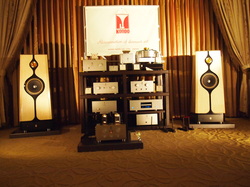 Beautiful... Beautiful to look at, beautiful to listen to, beautiful to talk about... It is the nirvana for a lot of audiophiles in Japan, and for some of us, mere mortals, elsewhere in the World as well. The closest system I have heard from the Pierre Riffaud/Tosca/Ocelia combo (punt intended...) I listened to at Point Musiques in Paris over my last trip. It is craftmanship of the highest order, as well as technically very sound and painstakingly researched and executed. A few kilograms of finesse in a world of brutes - better than chocolate? You tell me. Morel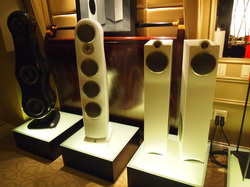 Nothing to do with mushrooms, although these shapes... Morel is an Israeli company more famous for their drivers (I am about to trial one of their tweeters...) than for their speakers, but hopefully this will change as these beautifully crafted products sound as good as they look. Stay tuned! REGA - Another first for BMRs in High End speakers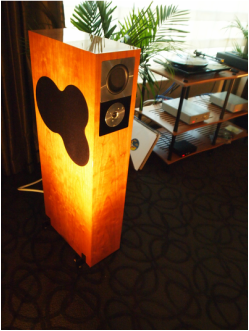 First spotted in Paris on an unofficial release, these speakers are taking advantage of the wide bandwidth of a 4.5" BMR driver to work from 300Hz to 6kHz. Rega has engineered a new tweeter just for the purpose to improve the high end over the BMRs that can go up to 22kHz, but tend to have some ringing over 5kHz. In the bass, they use two drivers of different sizes in separate enclosures for a smooth and extended bass response. Again the BMRs have trouble getting the right level below 120Hz, hence the separate subwoofer arrangement. Copmared to Naim, who decided to reengineer the BMR drivers, REGA uses a standard unit and spent the money on a complex filter and beautiful cabinet. And BTW, it sounds great as well! Waterfall Audio + Tributaries cables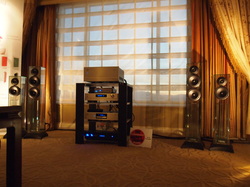 Waterfall Audio have a very good business in the US of A, thanks to a good distributor who pushes the WAF factor into the CEDIA type market and also gets a lot of press in lifestyle and decoration magazines. They teamed up with Tributaries, a relatively new range of high-end cables, where my friend Helma Paulson (ex Export Manager for Audioacess and Harman Kardon) is doing a very good sales job (she could sell ice to Eskimos, really...) and she almost convinced me that these cables were actually make a difference! Maybe I should ask for some samples.... Audiolineaire, Focal and other French ambassadorsAudiolineaire were present with their leathered speakers (unfortunately my photos don't do them justice...so, I won't post any) Focal were hiding in a private suite at the Mirage and couldn't find them (mind you it was lunch time whenI got there, so maybe that's where they were hiding...) and Cabasse were absent but for their Japanese distributor who distributes Devialet in the US - go figure!
In the New Year, I will give you a (short...) report on T.H.E. Show which is held concurrently at the Flamingos. In the meantime, I thank all of you that ventured to this site, some more than once - I love Google Analytics - and I wish you a very Happy New Year and many happy returns in 2013. I will try my best to continue to entertain and inform you. See you in January! 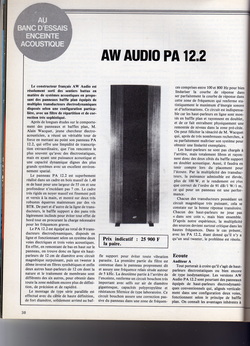 In April 89, the French magazine, La Revue du Son, published this review of the newest incarnation of the EA12 panel by AW Audio.
Called the PA12.2, it was a significant improvement on the original model. What this review reveals though for the first time, is some technical information about the construction of this outstanding speaker. And I had guessed successfully some of them...(see previous posts on AW Audio) First, all the full range speakers are in line, 2 on top of the tweeter, and six underneath. The tweeter is described as an inverted dome tweeter: at that period, only Focal was using that arrangement, so we can assume Alain Wacquet was using one... The full range speakers are mentioned as being 12cm in diameter, and one can assume that these would be of Audax origin. Although not exactly a D'Appolito arrangement, it certainly have a lot in common with it in terms of imaging and transient response. The tweeter is working only over 5KHz, and may or may not been time aligned mechanicaly, but certainly in the complex filter, as one main quality of these panels is their transient response. It seems also that an external filter is used to compensate for the acoustic short circuit in the bass region, inevitable consequence of a dipole speaker. My recollection of these speakers is that the bass spectrum, although not extended very low, was still believeable and extremely clean. Alain is a jazz enthusiast, and his demos always included fantastic percussions, which always came out of these panels as extraordinarily accurate. If I can quote Patrick Vercher and Jean Hiraga in their assessment of their performance, they compare these panels to electrostatic panels, the transcription of the music being "luminous", full of micro details, very respectful of instruments timbres. Again, my own recollection of these speakers is that voices were very realistic, specially female (Sade, very popular at the time, come to mind...) and the lower medium and upper bass region being perfectly reproduced due to the absence of box coloration. On small jazz formations and live recordings, you could hear the ambience of the venue, and one could easily feel being there - what any speaker designer is trying to achieve with various degrees of success! A few years later, Alain introduced the short lived "Transparence", probably the best way to describe his creations in one word. I am hopefully meeting Alain at the Paris Hifi Show next week-end and expect to get more first hand info on these unique speakers. 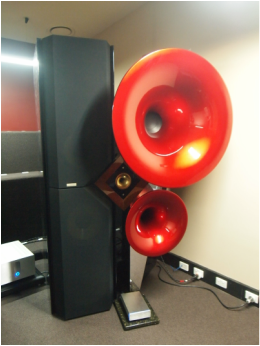 Over the last couple of years, I have been lucky enough to listen to some of the best and most expensive speakers available in Australia, namely the Steinway Lingdorff at Audioconnexion and the Focal Grand Utopia EM at Len Wallis Audio, both worth around a quarter of a million dollars. Four Grand Utopias have been sold in Australia alone so far! This time around, Len invited me to listen to his newest arrival: the huge Acapella Sphaeron Excalibur, this one worth a tad under half a million dollars, and you really need a barn around them to do them justice... So, even though Len and his team (Charles in particular...) have taken great care in setting these monsters up and pairing them with the best equipment, the room is certainly not large enough to develop their full potential. Having said that, I spent a few hours with my favourite music both on vinyl and on CD and prepared myself to be amazed, and amazed I was! Can I start by listing the equipment driving these very unusual speakers: Sources: Michell Orbe turntable, Rega arm modified by Michell with Dynavector cartridge Meridian CD player used as transport only, and Electrocompaniet D/A converter Amplification: Musical Fidelity PRIMO pure Class A tube preamp (Primo, zero feedback, pure Class A, triode, fully balanced preamp. Superlative sounding, beautifully built, beautifully designed, extremely reliable. - quote from MF website....) Krell Evolution 400 mono amp (The Evolution 400e amplifier is the smallest monaural amplifier in the Evolution Series. With a robust 400 watt output into 8 Ohms, this baby brother delivers plenty of punch - quote from Krell website...) 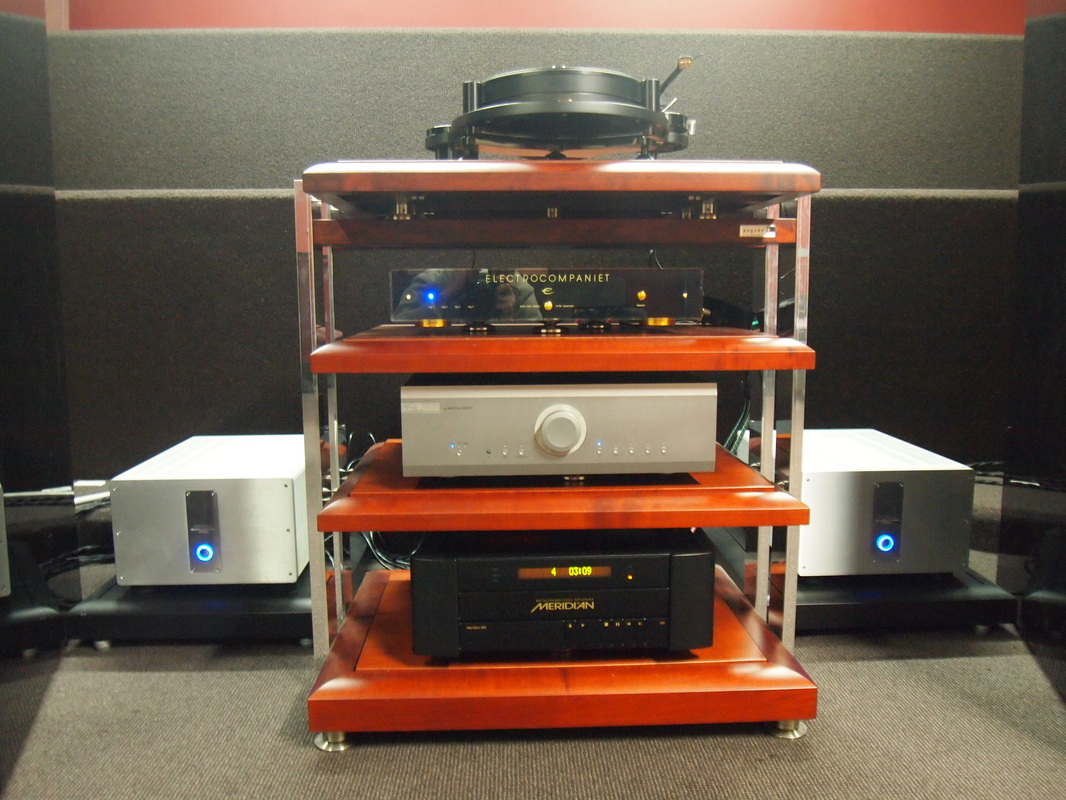 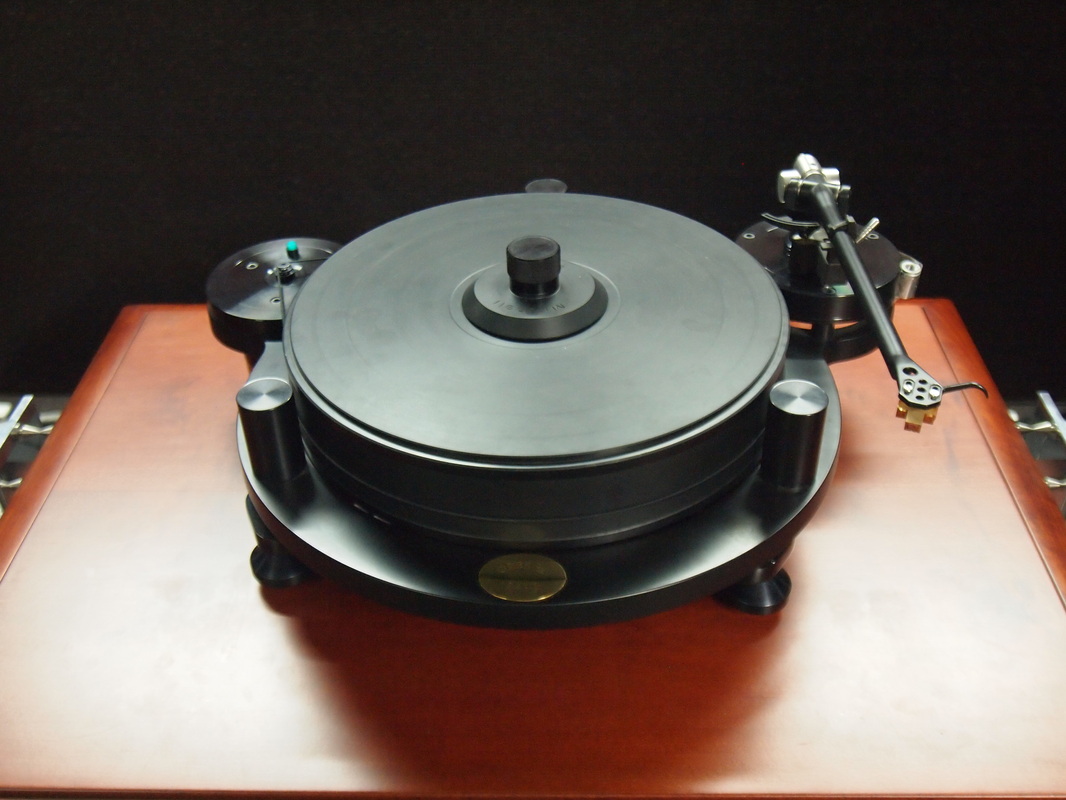 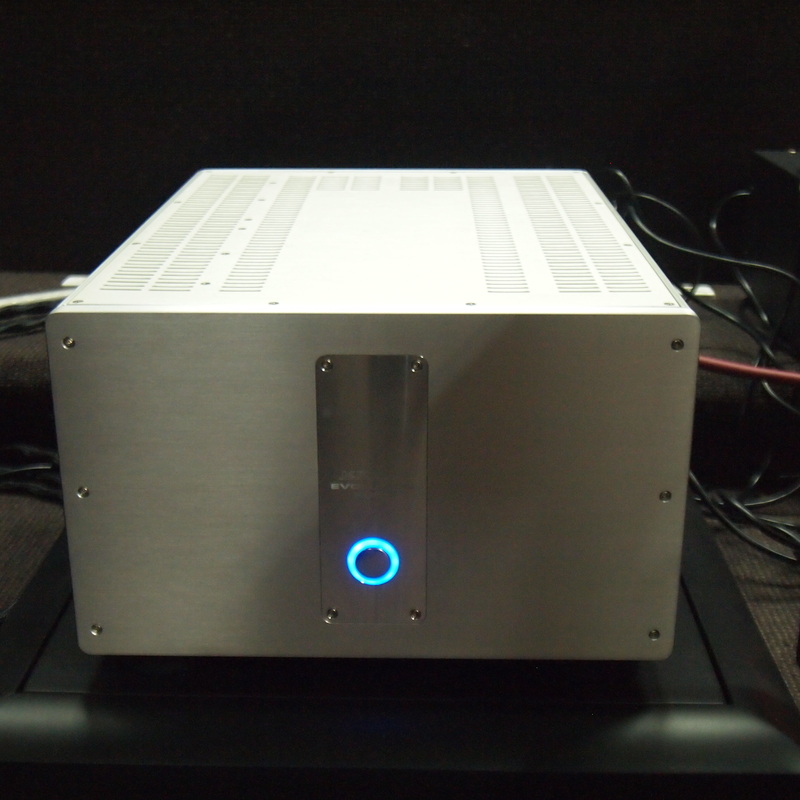 Now, what about the speakers themselves?
Well, for starters, although they are not a full range (as in one driver) system, they are very efficient at 100db/w/m, and thanks to four 15" (38 cms) drivers and a plasma tweeter, they are indeed very wide band, probably from 40 Hz to 50kHz in a "normal" size room, and certainly capable of going lower in frequency if you add the barn around them. The manufacturer recommends a room size of 40m2 (400sft) as a minimum. interestingly enough, although there is enormous potential for bass, these speakers never seem to over do it - instead the respone is very tight and well contolled. At the other end of the spectrum, the plasma tweeter is extremely accurate and extends way beyond anything I have listened to, and still is mellifluous. It is supposed to work from 5khz to 50kHz. My guess is that if you are a professional drummer, you should be able to recognise the brand of drums used in any given good recording. Now, what about the two horns? well they are spherical in shape (as the sails of the Sydney Opera House, btw...) and Acapella are claiming credit for their invention back in the late 70s... Although, the manufacturer does not share much about their frequency range, one can assume they use the same as in their Triolon speaker which only difference is in the size of the subwoofer. The frequencies below 170Hz are handled by four 15-inch drivers in each woofer tower. Each pair of woofers is in a separate sealed enclosure. Each woofer tower is composed of two of these enclosures. The enclosures are extremely rigid, heavy and well damped with felt, bitumen and lead. The bass towers are finished in a piano black high gloss. The sound from 170Hz up to 50,000Hz emanates as a spherical wave front. Frequencies from 170Hz to 700Hz are handled by the 30.5-inch horn which loads a 12-inch driver; those from 700Hz to 5000Hz, the 18.5-inch horn, and frequencies above 5000Hz is handled by the plasma tweeter. How does it sounds? The first impression is of life, and of being enveloped by music, immersed in the performance. Quite a feast! However, after listening to various types of music, both on vinyl and CD, there are some resonances in the horns that can muddle the sound, specially on voices. Also, at times, the instruments seem to "travel" from one driver to the next depending on the range in which they are played, and that can be quite annoying at time. But what they never fail to achieve is to involve you into the performance, particularly on live recordings like Bill Evans trio recorded in Paris in the 70s or my reference record, Alchemy live from Dire Straits. You find yourself tapping your feet or wanting to clap your hands! This in itself is what I crave for in any speakers, and these ones certainly qualify. Do you need to spend that sort of money on a pair of speakers to get there, not to mention the ancilary equipment? Well, I am not sure. I was certainly impressed, but probably not sold...Your own impressions are welcome! So, if you are in Sydney, go and visit Len wallis Audio in Lane Cove: it is certainly worth your while! Today, I will review the two brands/products that have most impressed me in terms of speaker design and new to me. Atohm and Waterfall Audio are kind of cousins as Thierry Comte is a partner in Waterfall, and the main driver (sic...) behind Atohm. Besides, Waterfall Audio uses almost exclusively Atohm speakers. Both companies have created a range of speakers that have some design criteria in common, but have achieved very different products out of some of the same components. Atohm drivers are all high efficiency and both bass and midrange drivers have a metal membrane. Their top of the range tweeter however has a silk membrane and a 28mm diameter coil small enough to always stay within the humongous magnetic field of more than 17000 Gauss, resulting in a massive 98db/w/m efficiency.  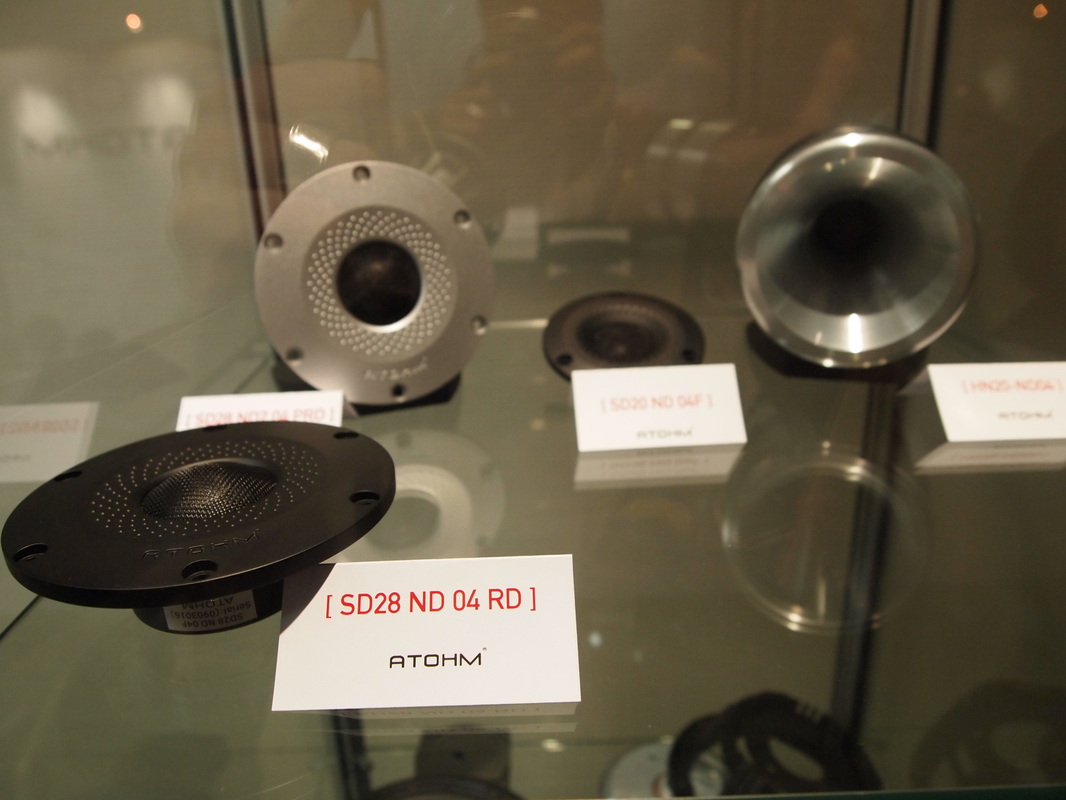 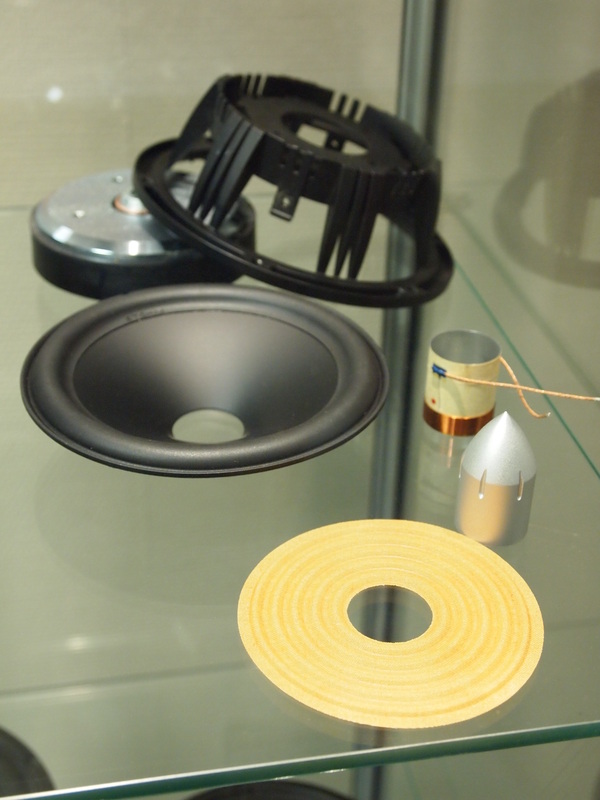 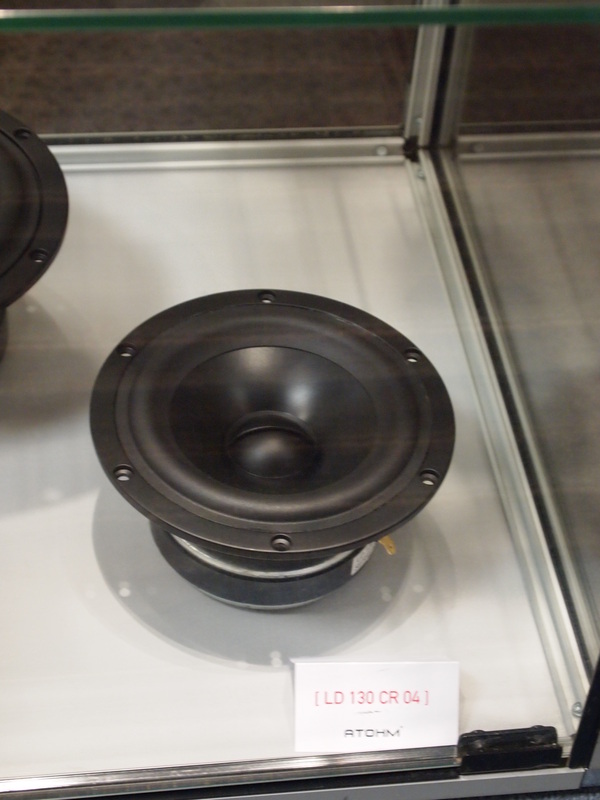 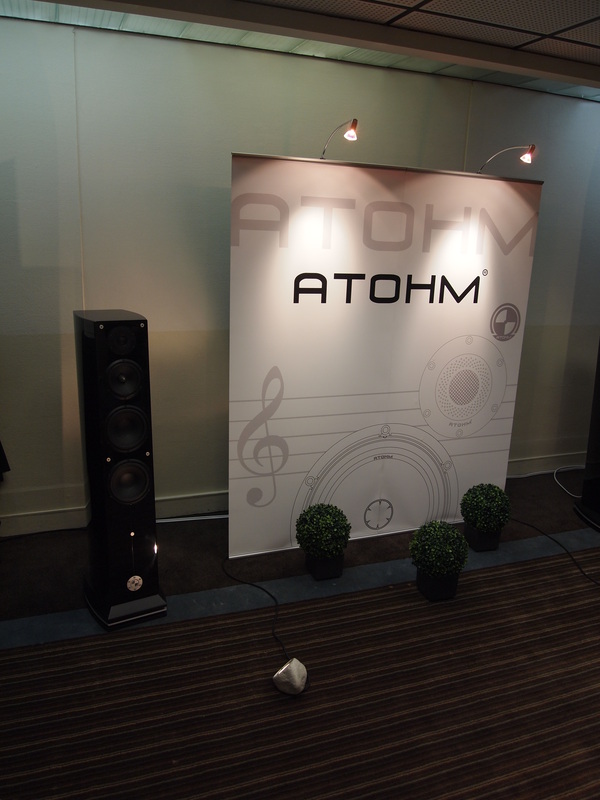 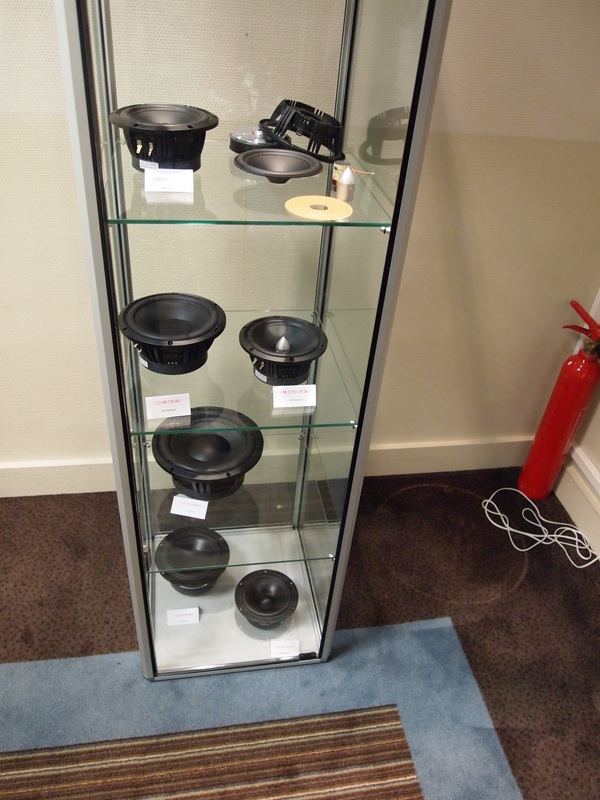 We were exposed to their top model, the GT 3.0, a so-called 3.5 way freestanding speaker beautifully finished and equipped with 2 7inch bass drivers, 1 6inch medium with a phase plug and the above mentioned supertweeter. The crossover frequencies are 100, 150 and 2500Hz, hence the 3.5 way name. All filter slopes are 6db and the tweeter is time aligned. The midrange driver has its own chamber fitted with an internal conical structure aimed at taming the standing waves and reflections inside that cabinet. This is reminiscent of the structure in the B&W Nautilus, but inverted inside the cabinet. The bass drivers are installed in a bass reflex enclosure with a laminated vent at the base of the speaker's cabinet (like in our Microphase SWS subwoofer, this arrangement removes most of the potential problems linked with the floor structure and the position within the room). The very well conducted demo showed the accuracy, speed and time alignment of this speaker, highly respecting the timbres of instruments and at 92db efficiency and 300W power capacity, reproducing the music with a realistic level and a total absence of distortion. Definitely in my top five at the show. Their cost of 7,900 euros + seems to be the norm at that level of quality (Elipson 4260, Vienna Acoustics, or my favourite Martin Logans are twice the price...)   Waterfall Audio has taken a different approach, using some of the same drivers, in their top model, the Niagara. First of all, Waterfall has made a name for themselves by introducing glass cabinets for their speakers. We all know that glass is a very inert material, but being transparent, one cannot hide much inside the cabinet. Besides, it is quite a difficult material to process and assemble, more so once you add the complexity of a horn in front of the tweeter! But Cedric Aubriot and Thierry Combe are not the types to refuse a challenge, and they came up with a number of innovative ideas to make this speaker a "chef d'oeuvre" in the sense of the Compagnons in the Middle Ages. The result is a beautiful objet with a very high WAF - they have their Export Manager, Nadine, as their first judge, and she has convinced women (and men, I am sure...) in 30 countries to agree with her and buy this wonderful object! Having said that, the auditive result is totaly in tune with the aesthetics of the product, proving once more that form should follow function if one wants to achieve the best possible results in any field. Electroacoustics are still full of "black magic" and in this case a transparent one: the filter is hidden in the base of the speaker, and so is the larger passive bass driver. Again, the midrange driver has its own enclosure baptised Acoustic Damping Tube, and the bass is generated mainly by a second 7inch driver. The tweeter is a 21mm diameter with a silk cone behind the proprietary glass horn. All drivers are bespoke versions of Atohm drivers. The sound is solid, accurate and neutral. At 89db and 200w power handling, the output is realistic with a very nice, precise soundstage. At 27,000 euros, this is not for the faint hearted, but a tenth of the price of a Focal Utopia and a lot easier to fit in one's living room. And with all due respect to Jacques Mahul, a much more lively proposition, more engaging with the source material, and, after a relatively short audition, certainly not less accurate. It is to be noted here that Len Wallis (of Len Wallis Audio fame in Sydney) has given me access for a full morning to the Utopia in his showroom with two of his most knowledgeable sales people (and vinyl enthusiasts on top...) as my 60th birthday present...and so, my opinion of the Utopia is based on a much longer listening session on my own material. Although we had probably hal a million dollars of equipment in that room, I cannot say I was totally convinced mainly because it was almost surgical and lack the passion to engage my senses totally. So, if I had a spare 40,000A$, I would certainly consider the Niagara! I would like to try them with my Bryston amp and a Michell turntable and Grado Signature cartridge. Maybe the Aussie distributor of Waterfall Audio can organise that for me ( I will BYO my amp!!!) 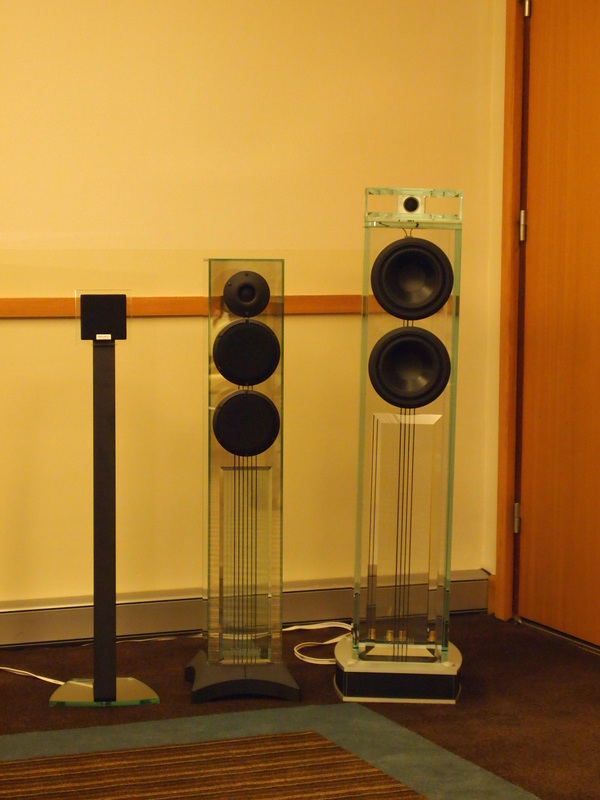 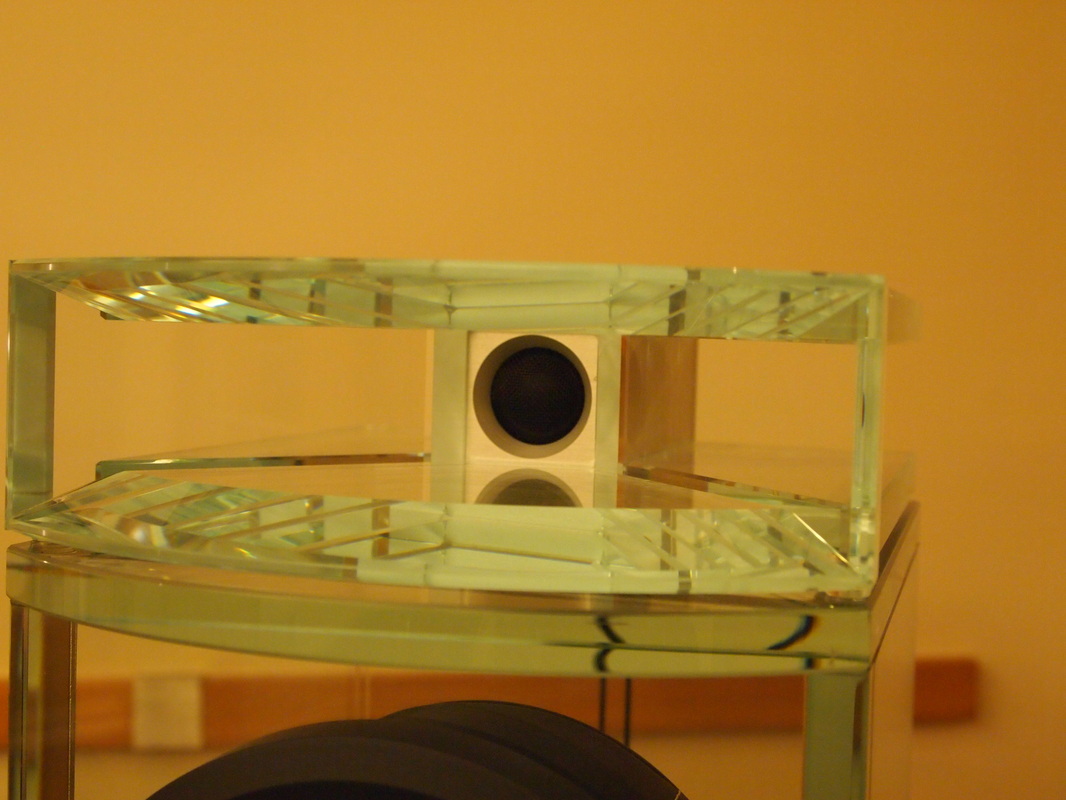 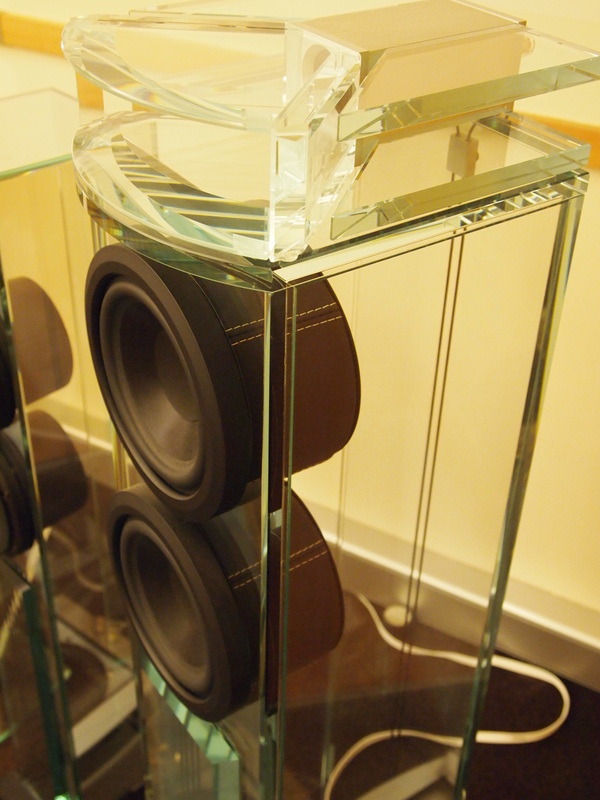 |
AuthorBorn in France, well travelled, relocated to Sydney in 1997.  Archives
July 2023
Categories
All
|
 RSS Feed
